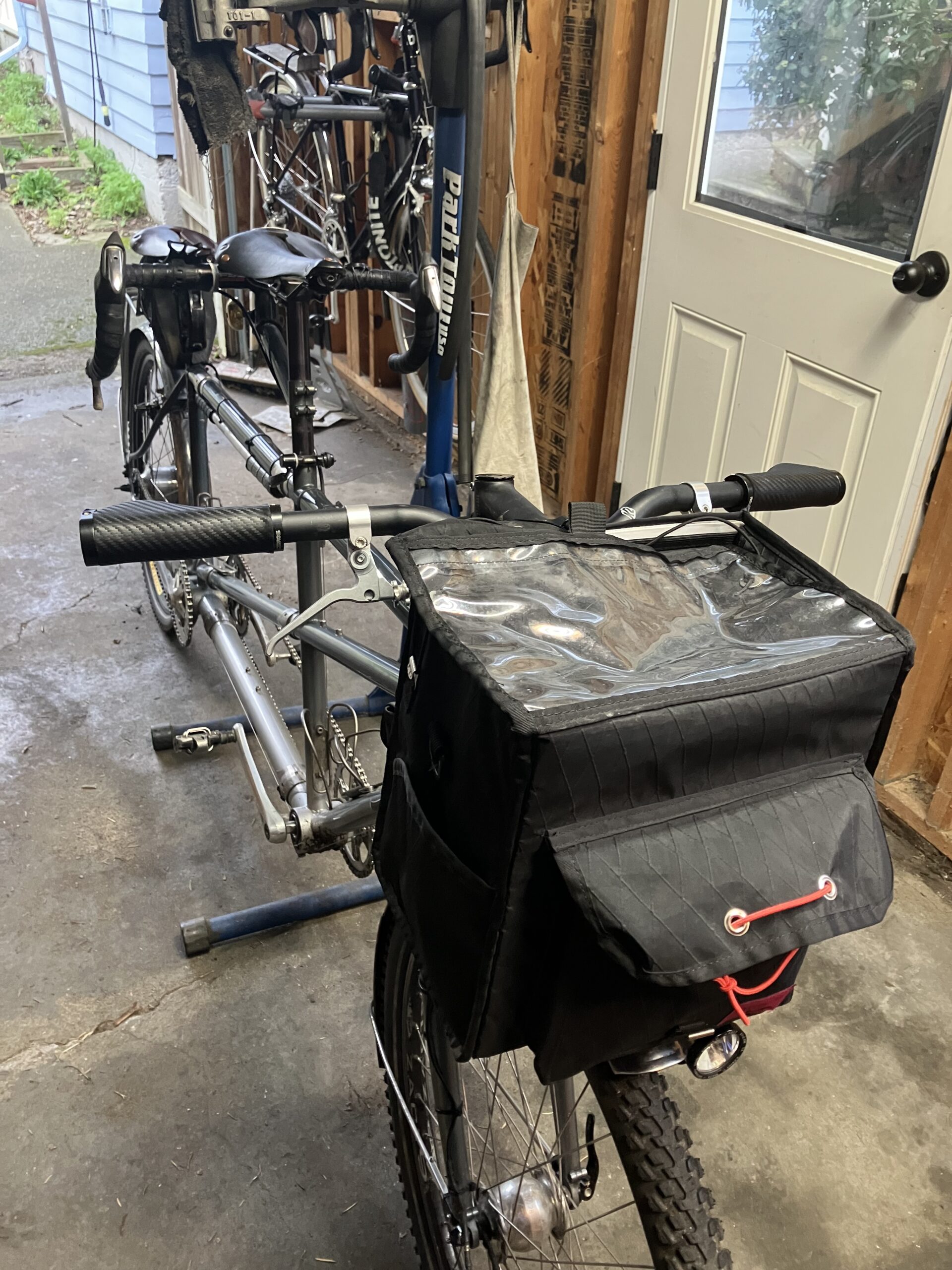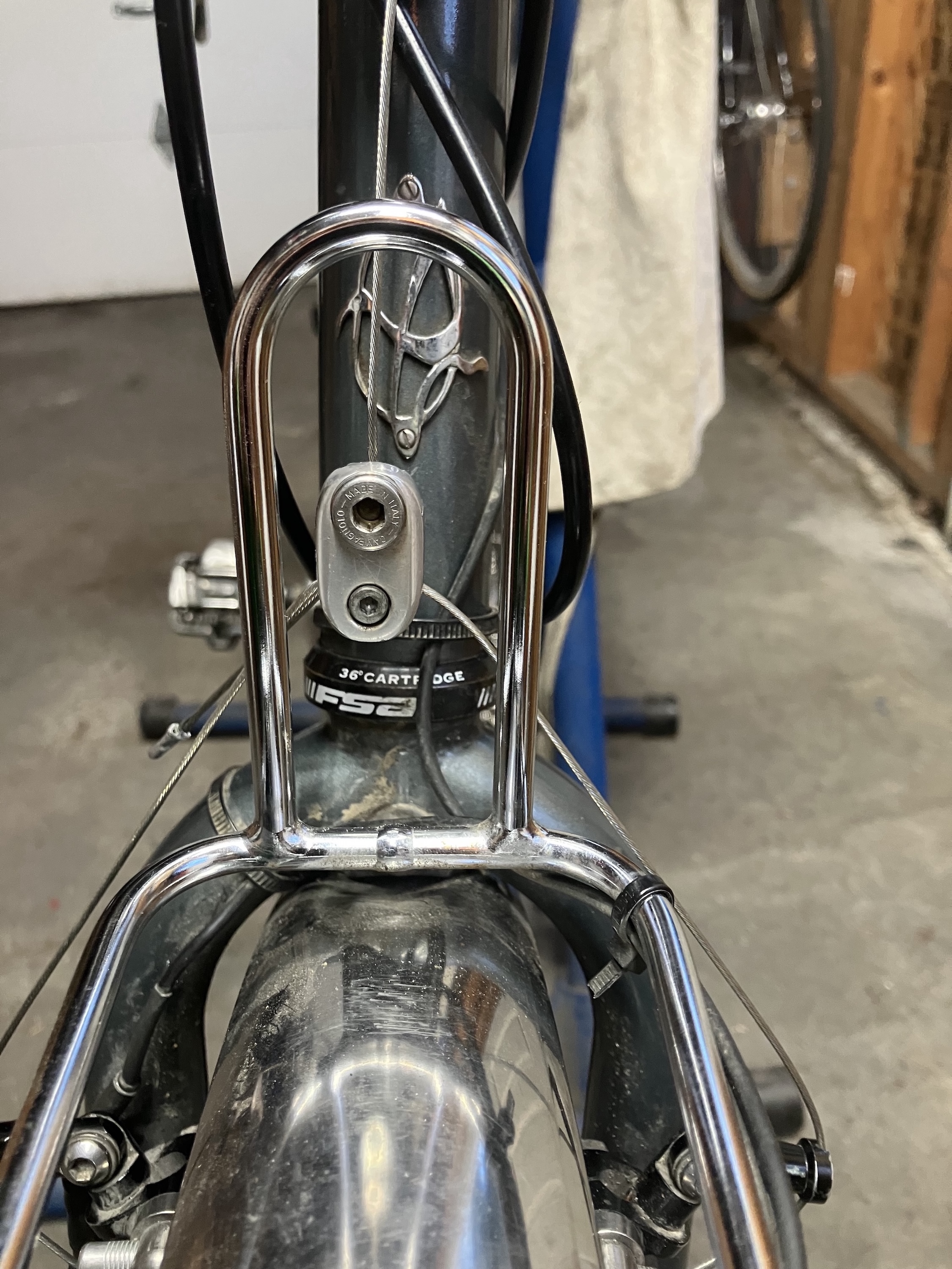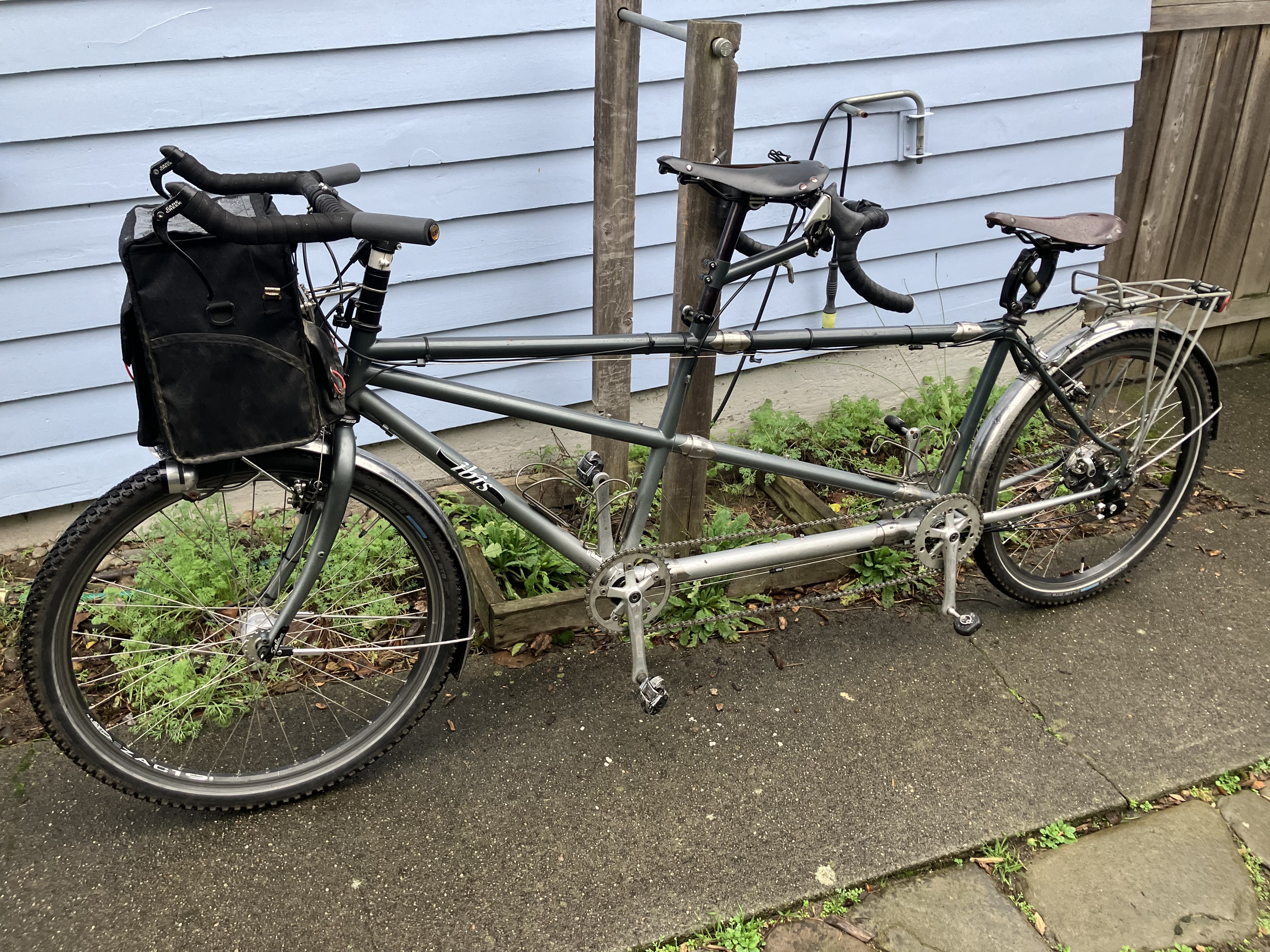
In the late fall of 2025 I picked up a Litespeed tandem and spent a good bit of time retrofitting it with a Di2 drivetrain. In the middle of that project I was interrupted by the failure of our Ibis tandem, naturally occurring just when the weather called for a bike with fenders.
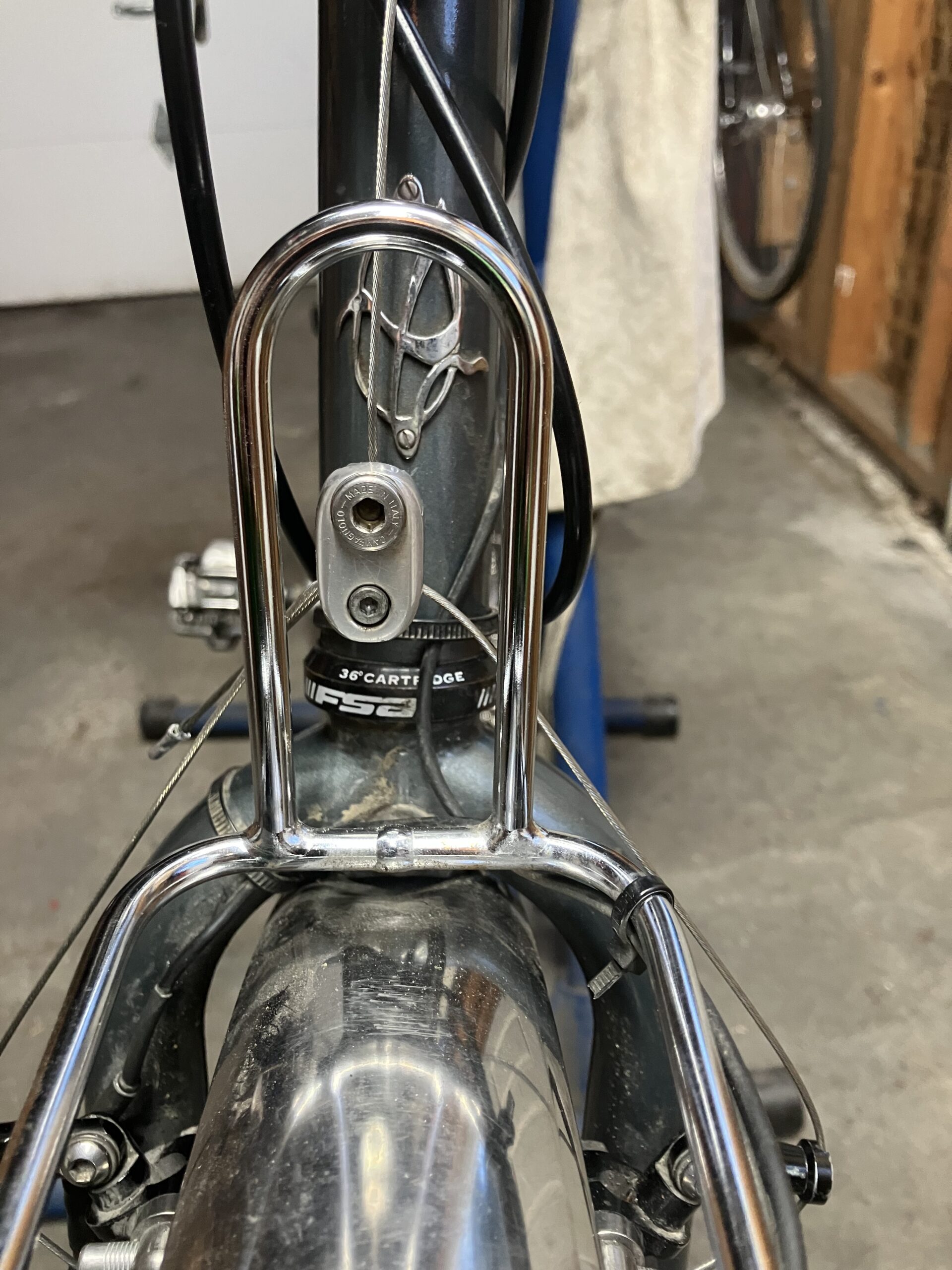
The history of the Ibis goes back to 2014 when I had just quit working and was looking for a project bike. I retrofitted it with S&S couplers, a Rohloff hub, and a dynamo lighting system, eventually spending many times the original $200 purchase price. We took it on some epic rides including a couple of Gran Fondos east of the mountains. After my experience with the Franklin Rohloff conversion, I went with the Gebla shifting system – mainly because I didn’t like the look of flat bars on what was essentially going to be a road bike. For the Ibis I bought new Chorus 12-speed shifters and had R+E disable the downshift mechanism. The Gebla “Rohbox ” was never as satisfactory on the tandem as it was on the Franklin. It may be related to the length of the cable run, but in the six or seven years we rode it we had at least half a dozen episodes where the right shifter became really difficult to operate and eventually the end would break off of the cable. I became proficient in replacing Rohloff shift cables as a result (cable splitters make a huge difference) but we ended up hesitating to take the bike very far from home in case we had to ride it back as a single-speed.
In the summer of 2025 we had another broken cable and took the bike to The Polka Dot Jersey for service and repair. When I picked the bike up I had a long conversation with a mechanic there who had worked at Rohloff in Germany some time ago. He was impressed with the OEM cable holder and torque block, but was less impressed with the Gebla shifting, telling me that the system was only available for a little over a year and that the company was out of business now.
I rode the bike home and it worked well with clean shifting – a fun ride. Odette and I rode it once or twice on unpaved roads that fall, a total of maybe 50 miles, and found that while the bike worked properly, it didn’t shift as easily with a stoker on the back as it did when I was alone. Before Thanksgiving I installed fenders on it and rode it around the block to make sure it didn’t have any rubs – and the end broke off the cable. This time it seemed to be more than just a broken cable – the shifter didn’t have any resistance at all and there was no sense of a ratcheting process. I was pissed.
I fretted about shifting the Rohloff for a couple of weeks – the choice seemed to be spending whatever it took to make it work right vs. getting it rideable as cheaply as possible with an eye toward selling it. Eventually, after consulting with Alder at R+E, I ruled out rebuilding / replacing the Campy lever and decided that I would mount a regulation Rohloff twist-shifter and decide separately whether or not to sell. (Alder told me that while Gebla was still around and doing fine, they had only had a single American agent(Cycle Monkey?) who had gone out of business or at least weren’t importing Gebla any more.)
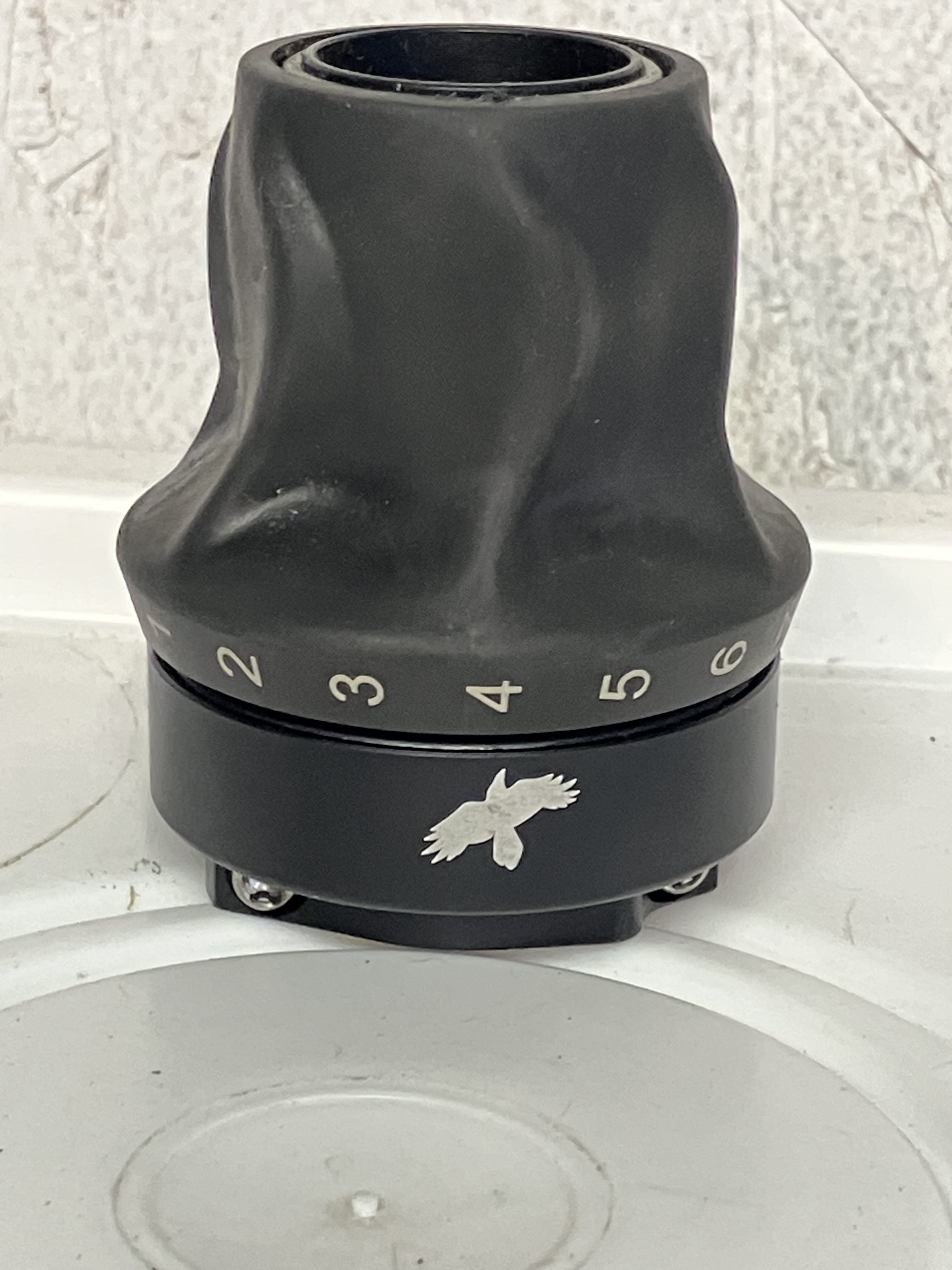
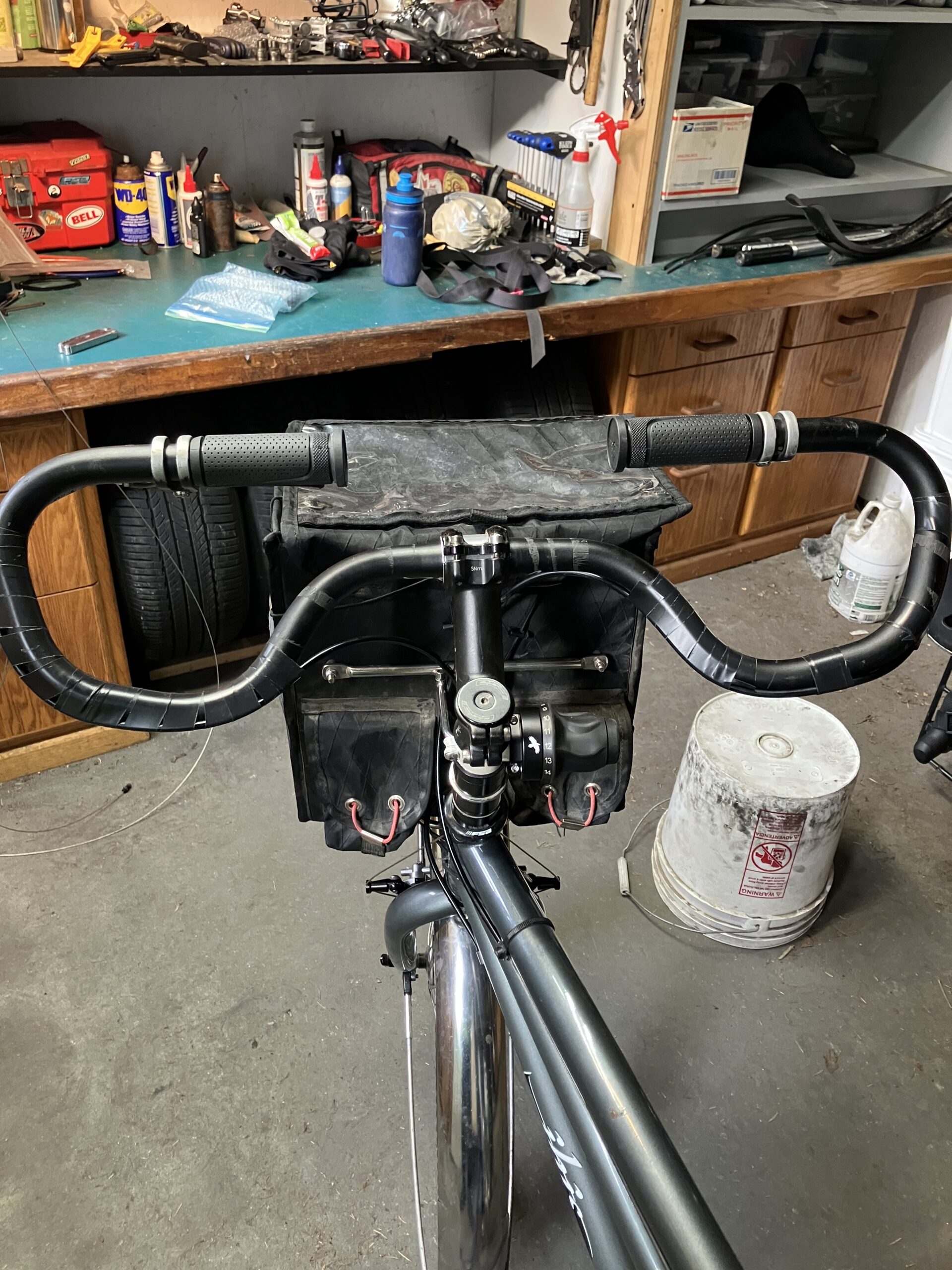
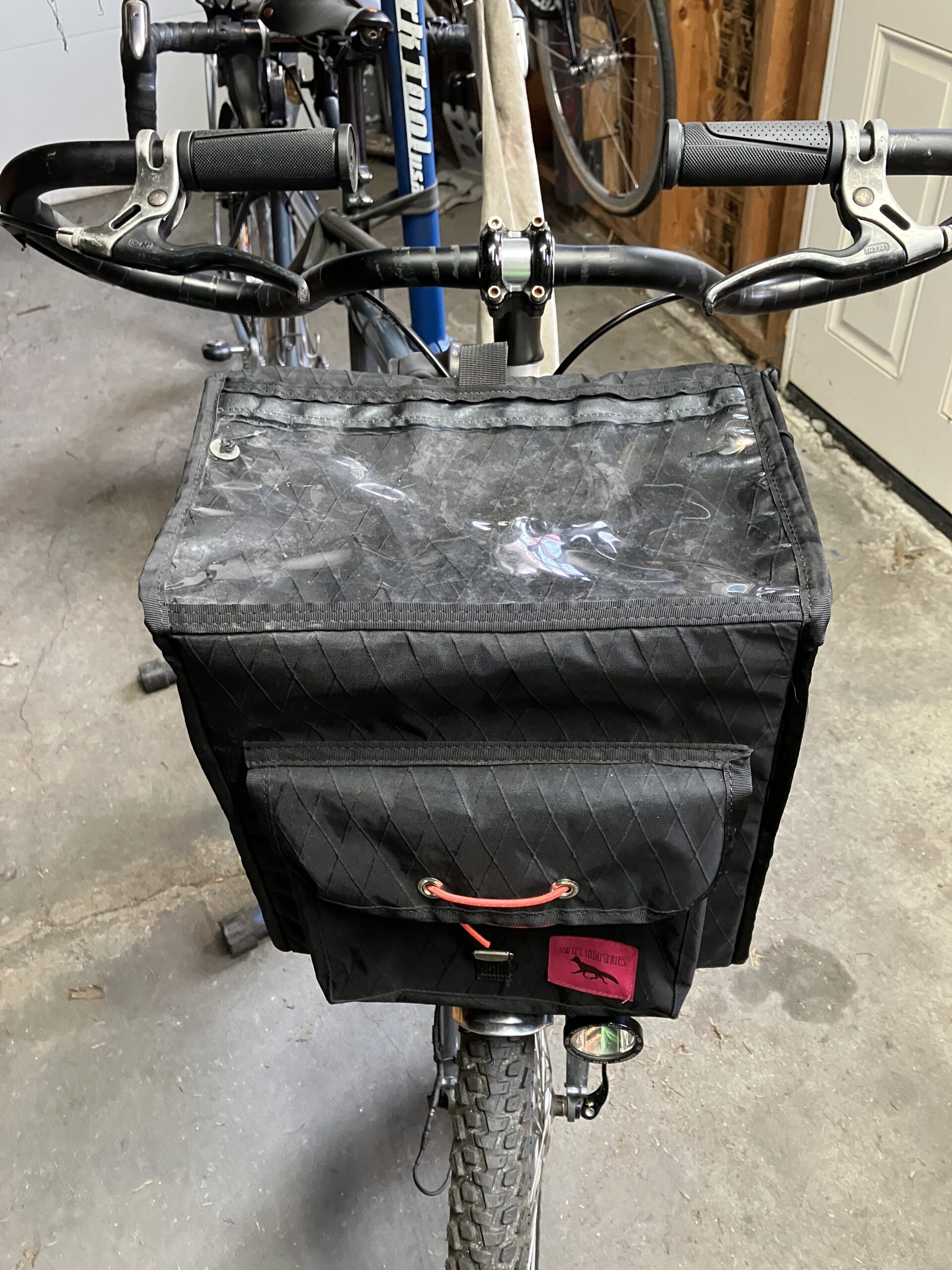
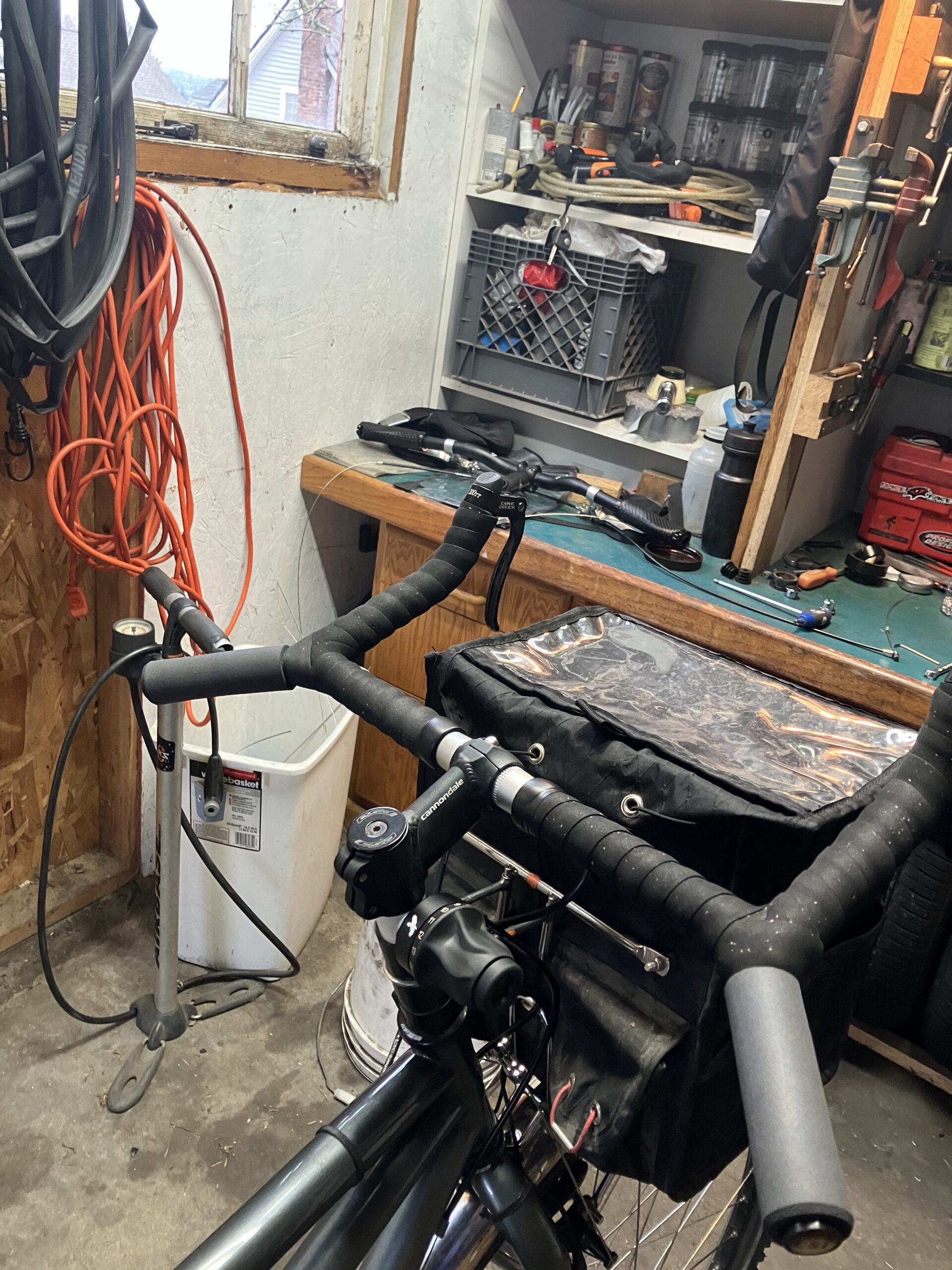
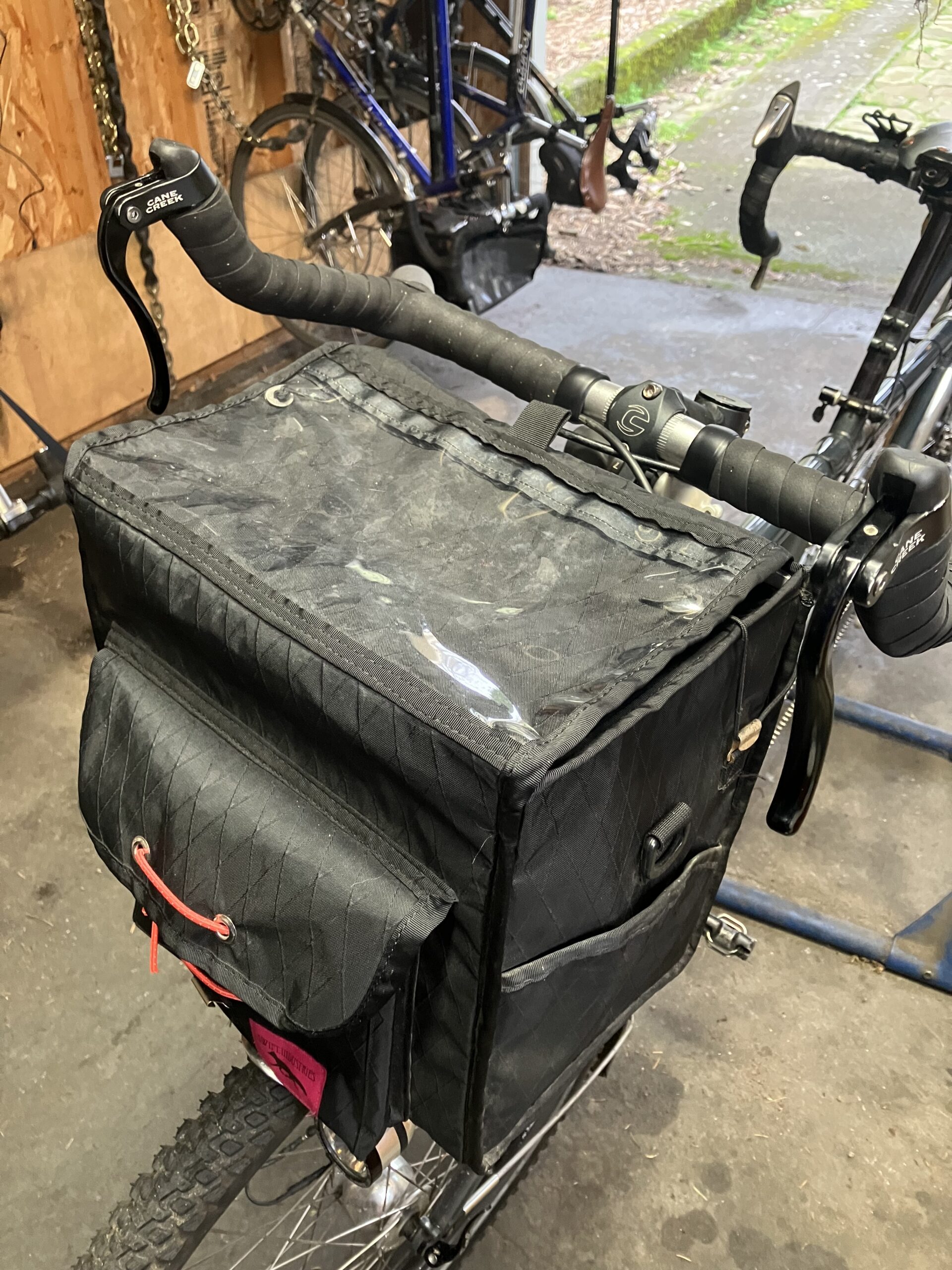
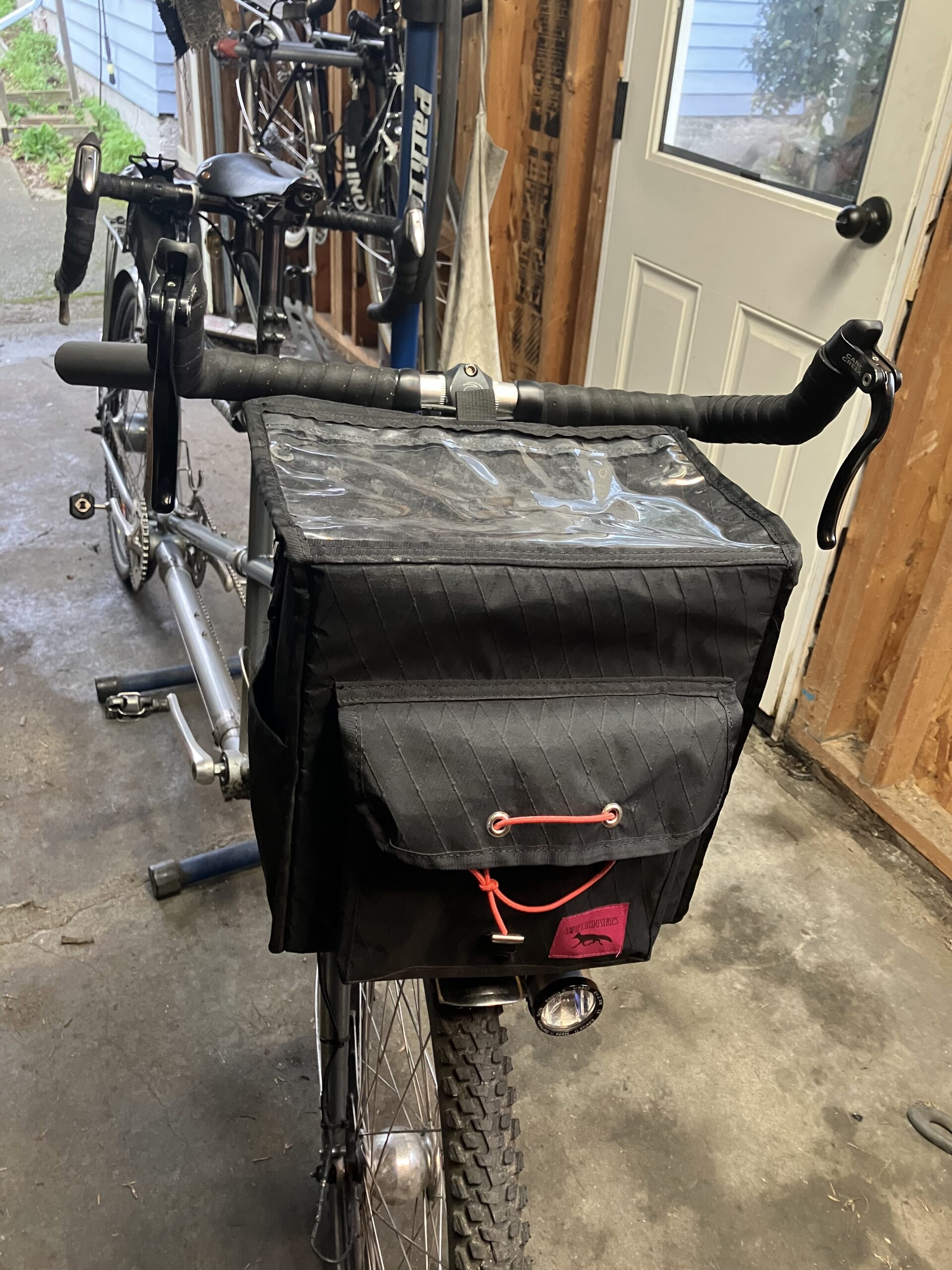
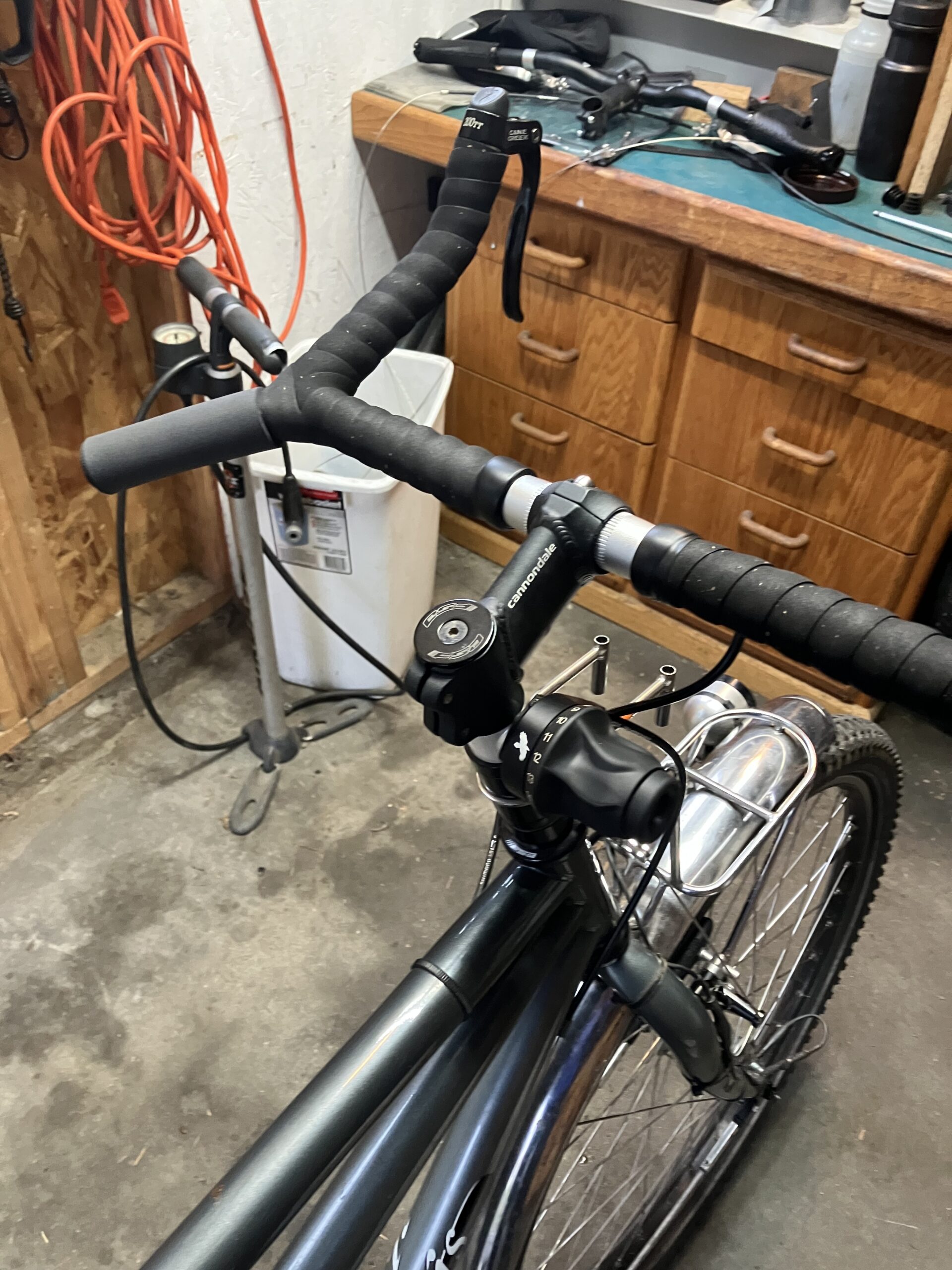
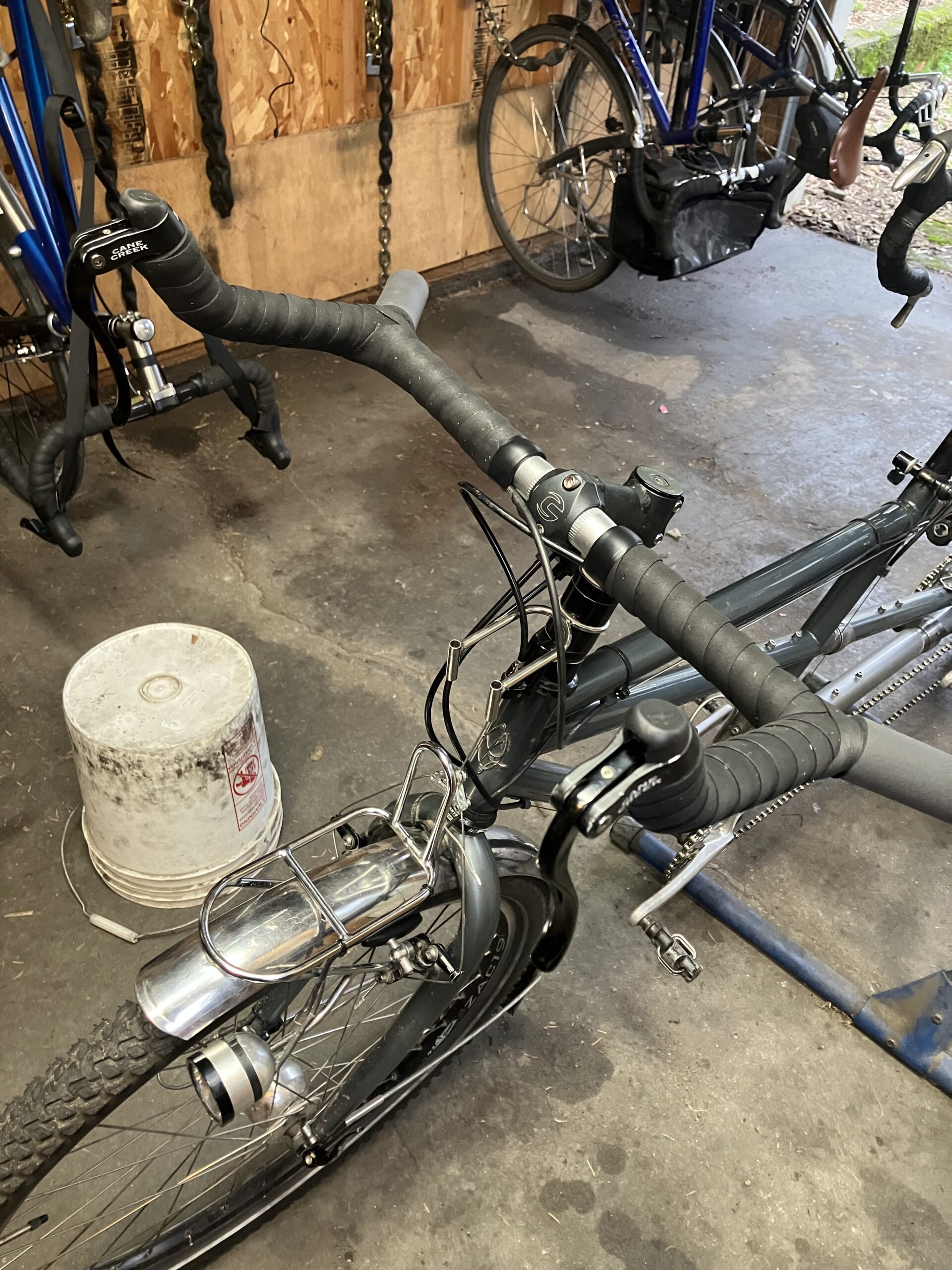
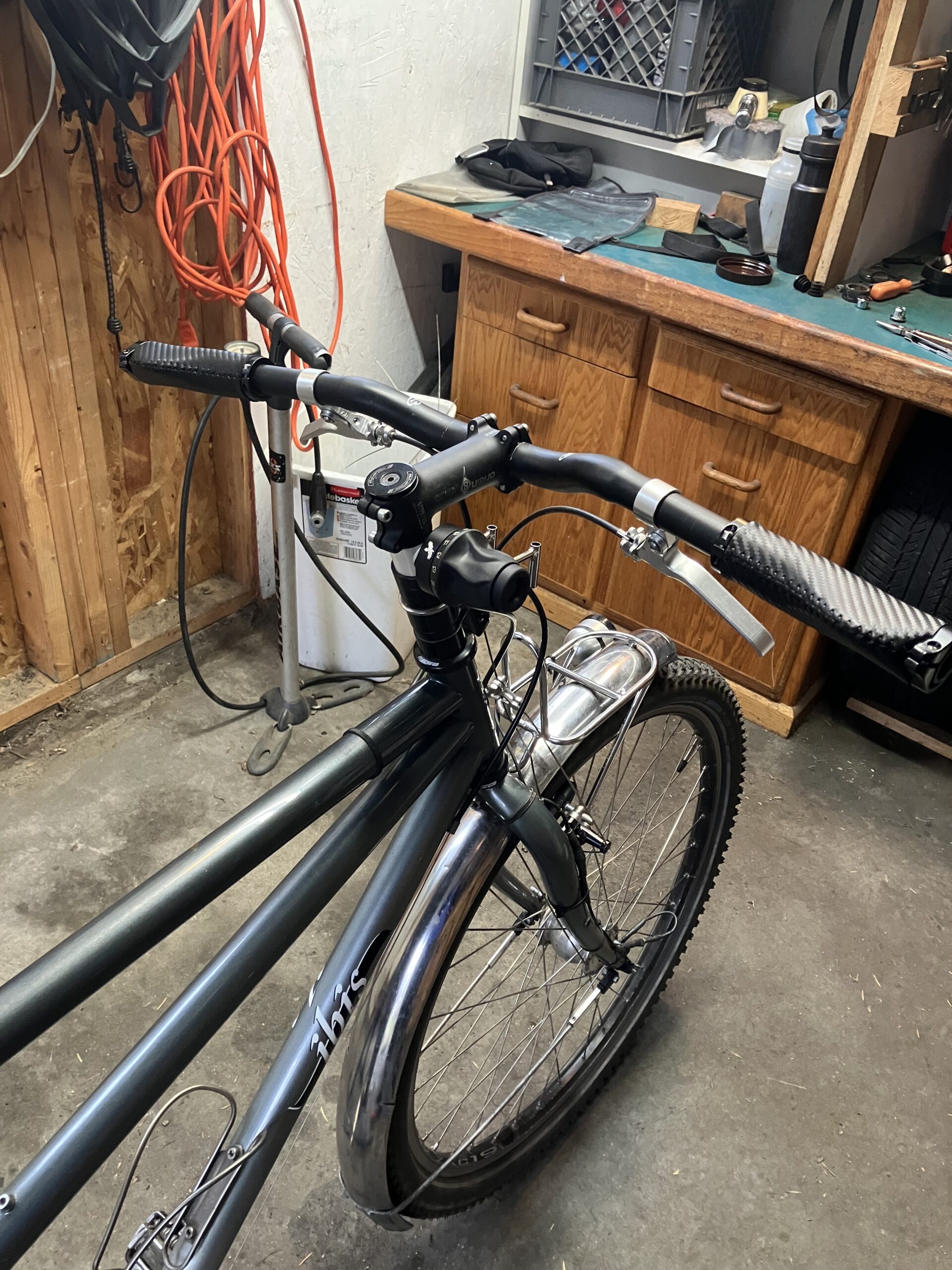
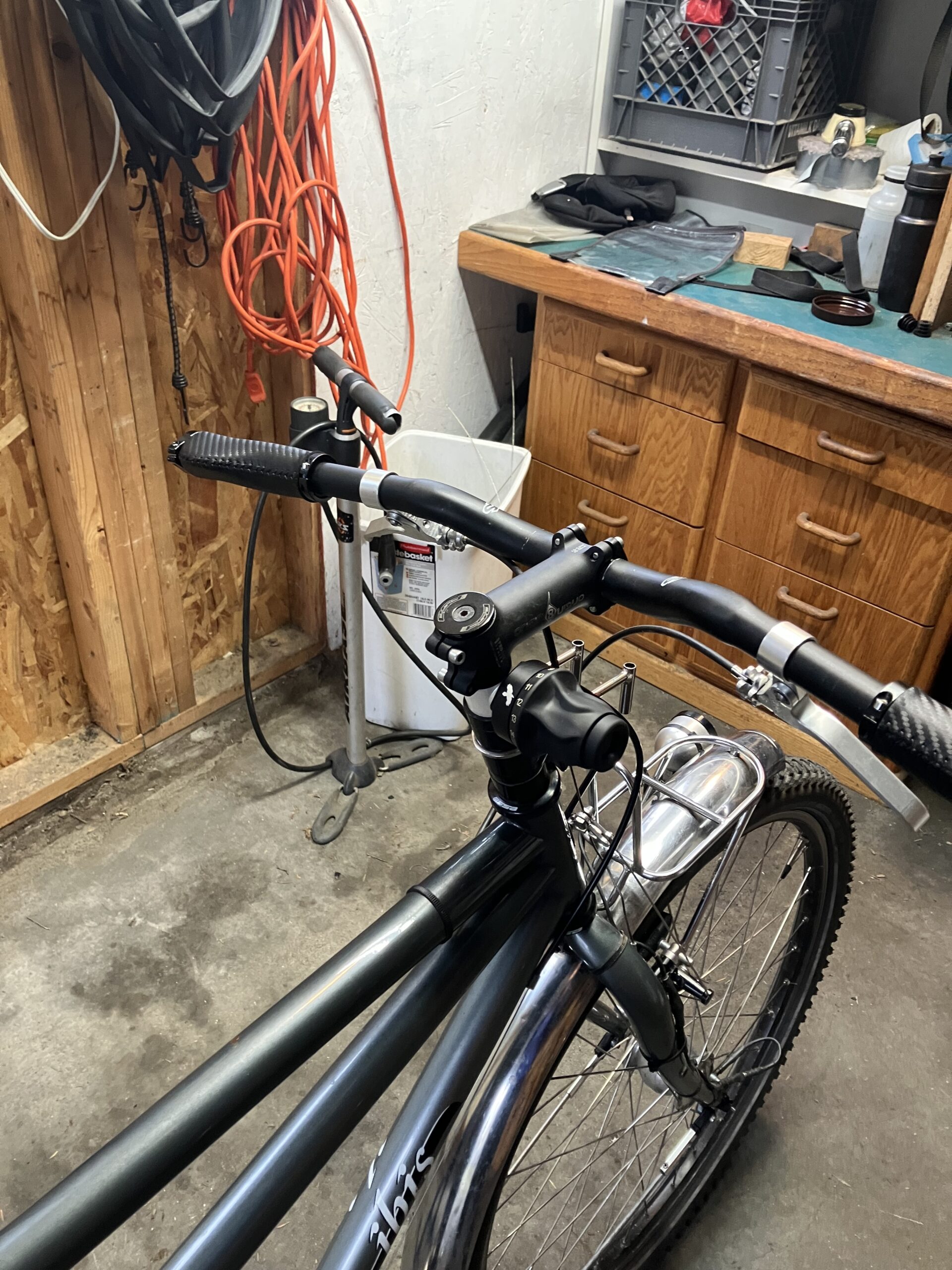
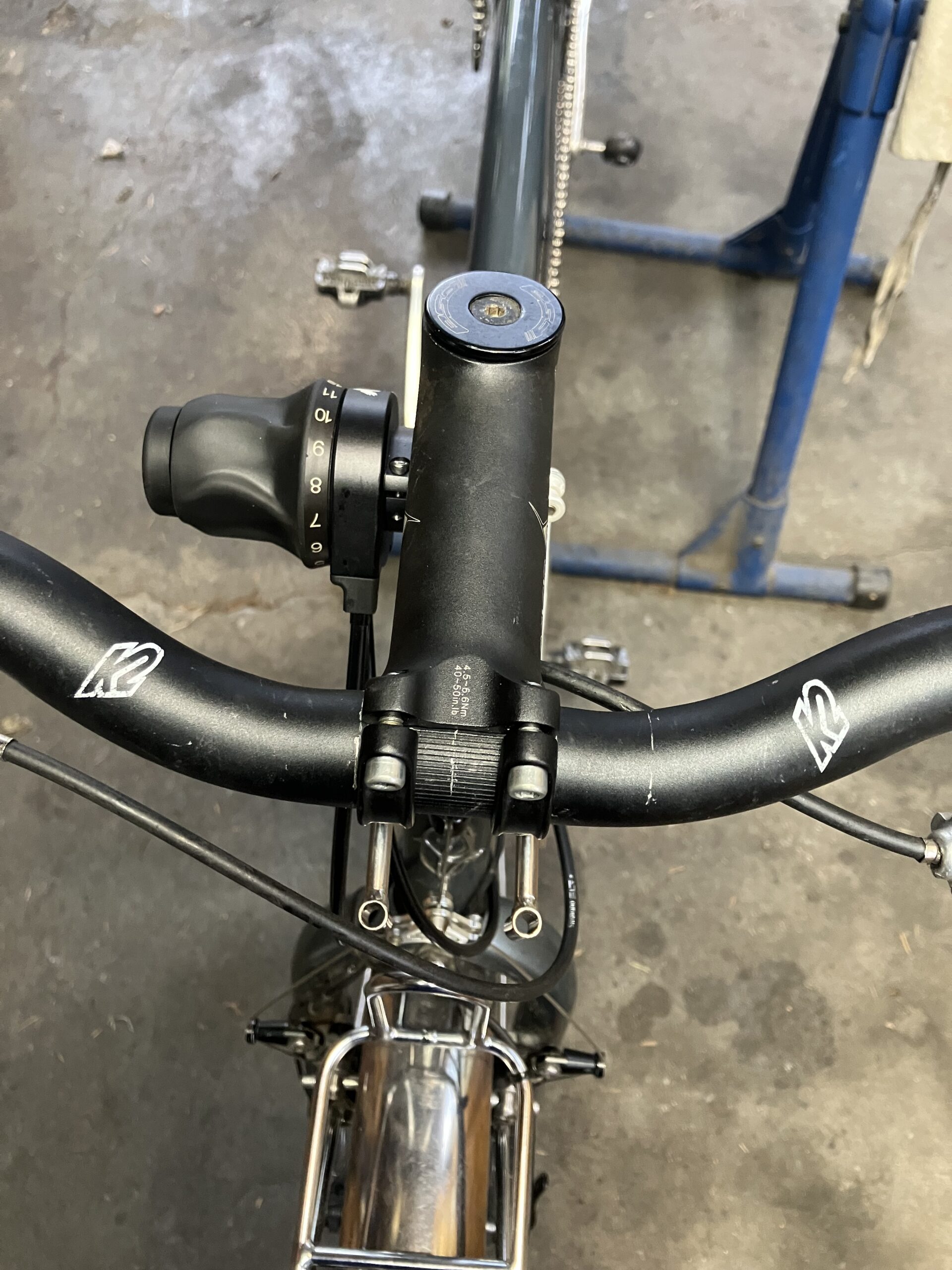
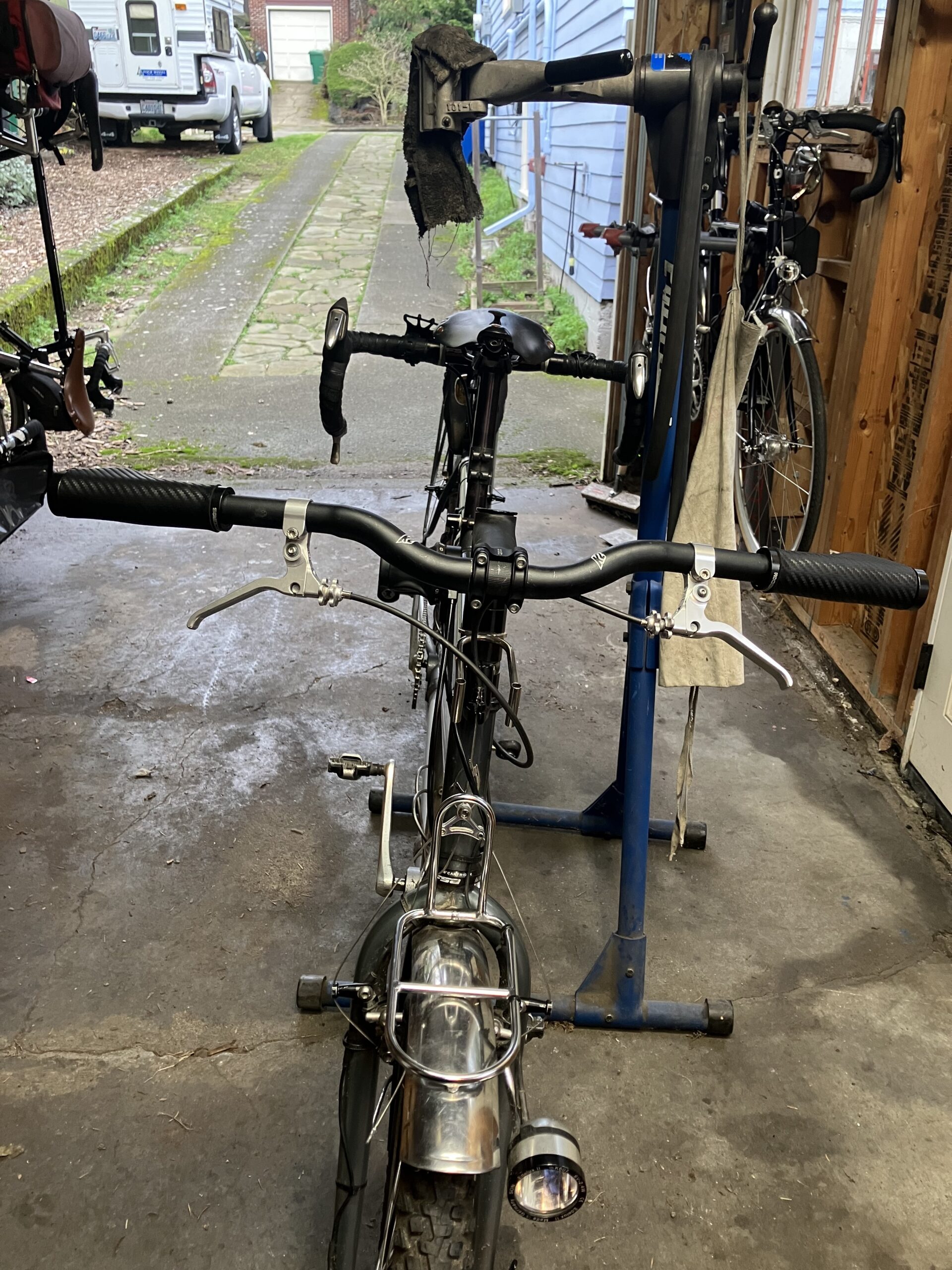
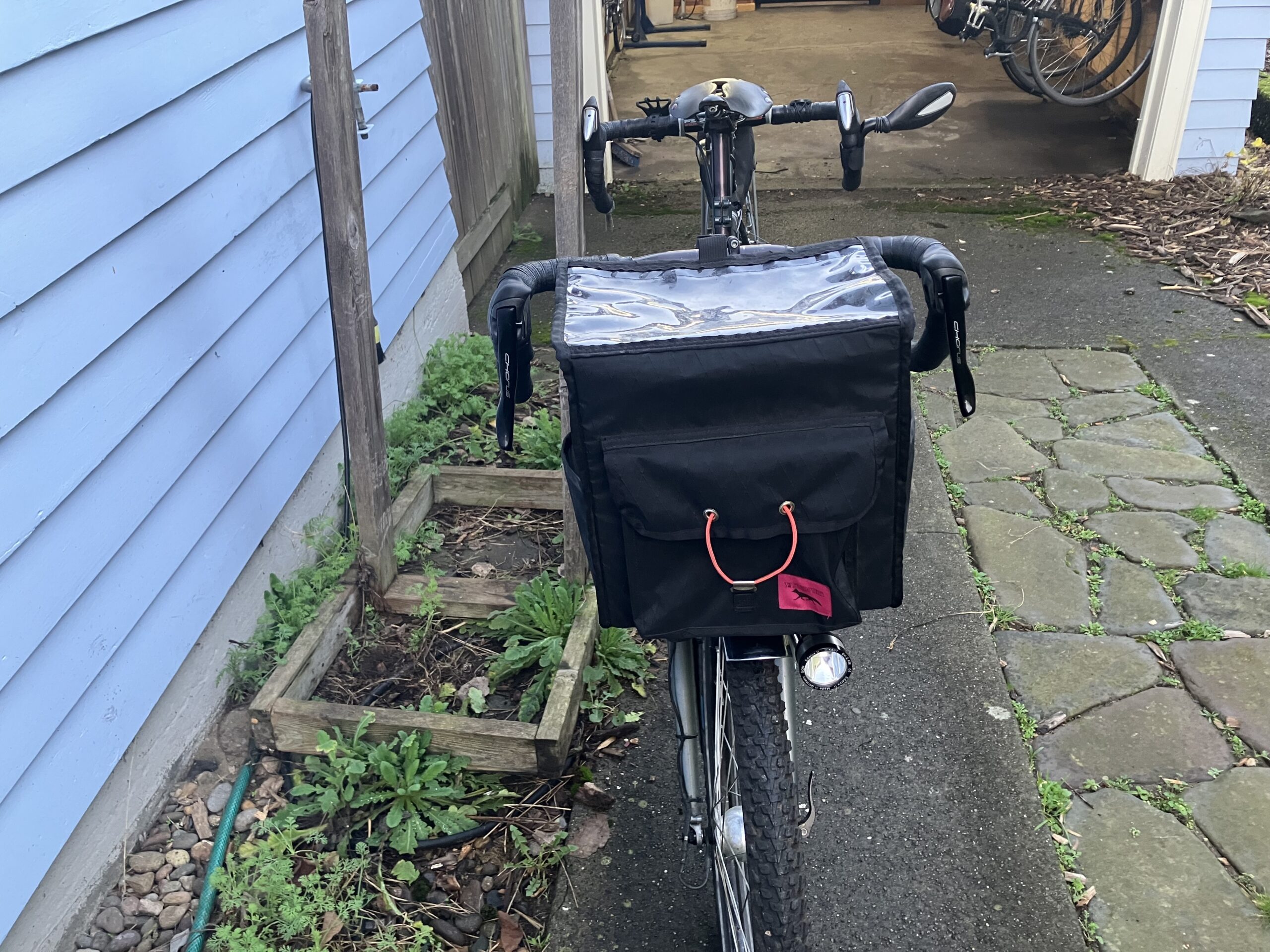
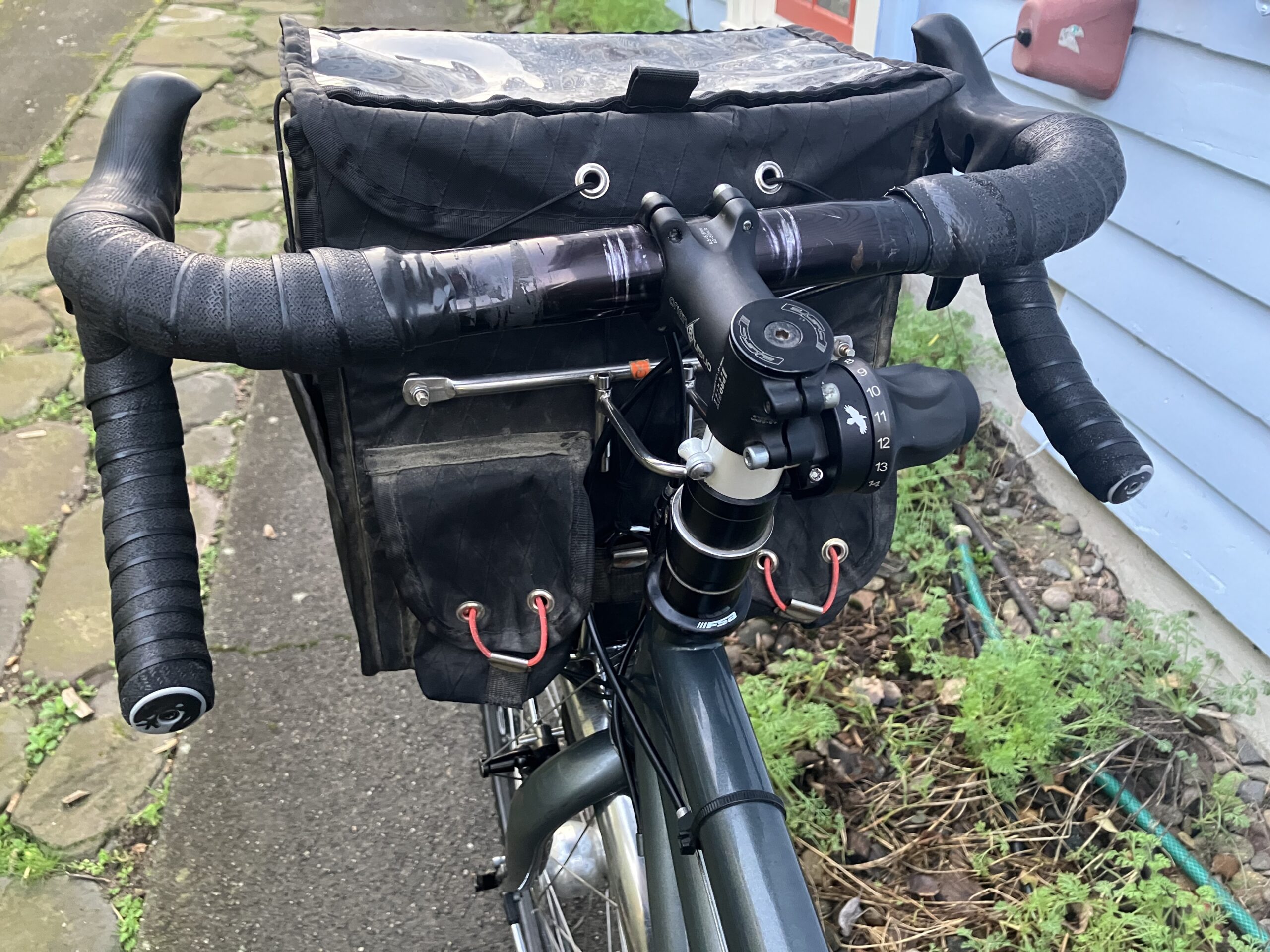
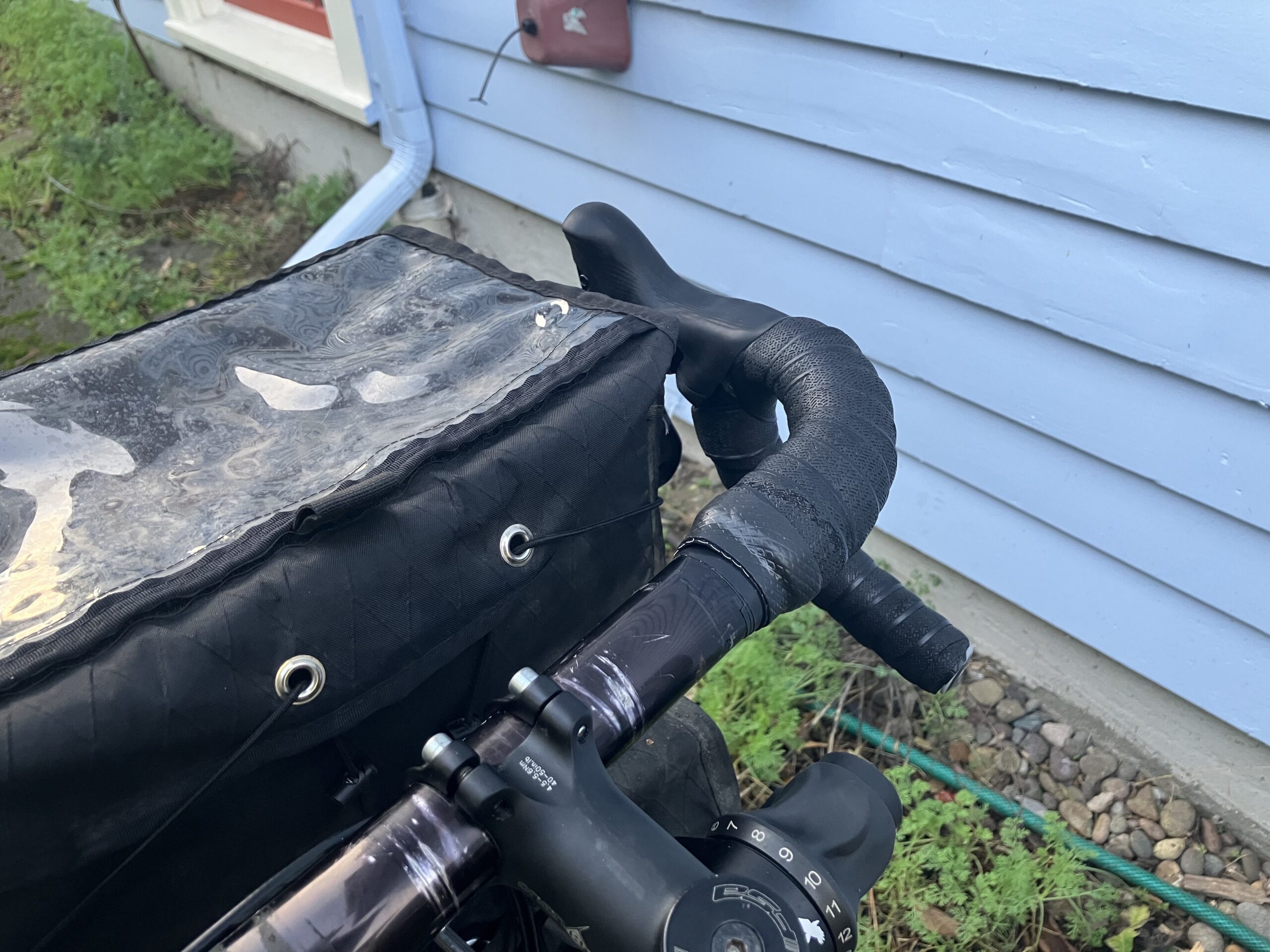
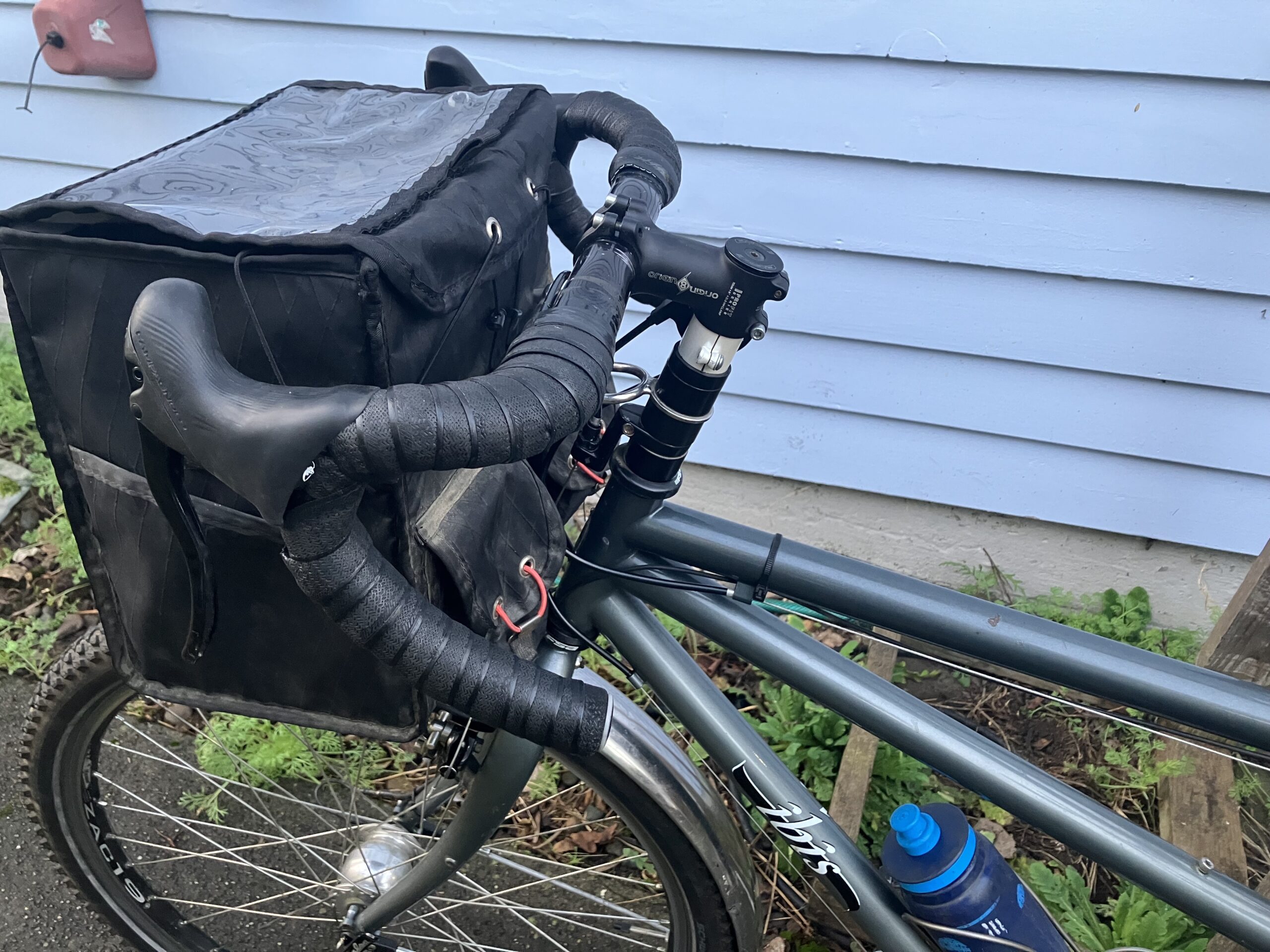
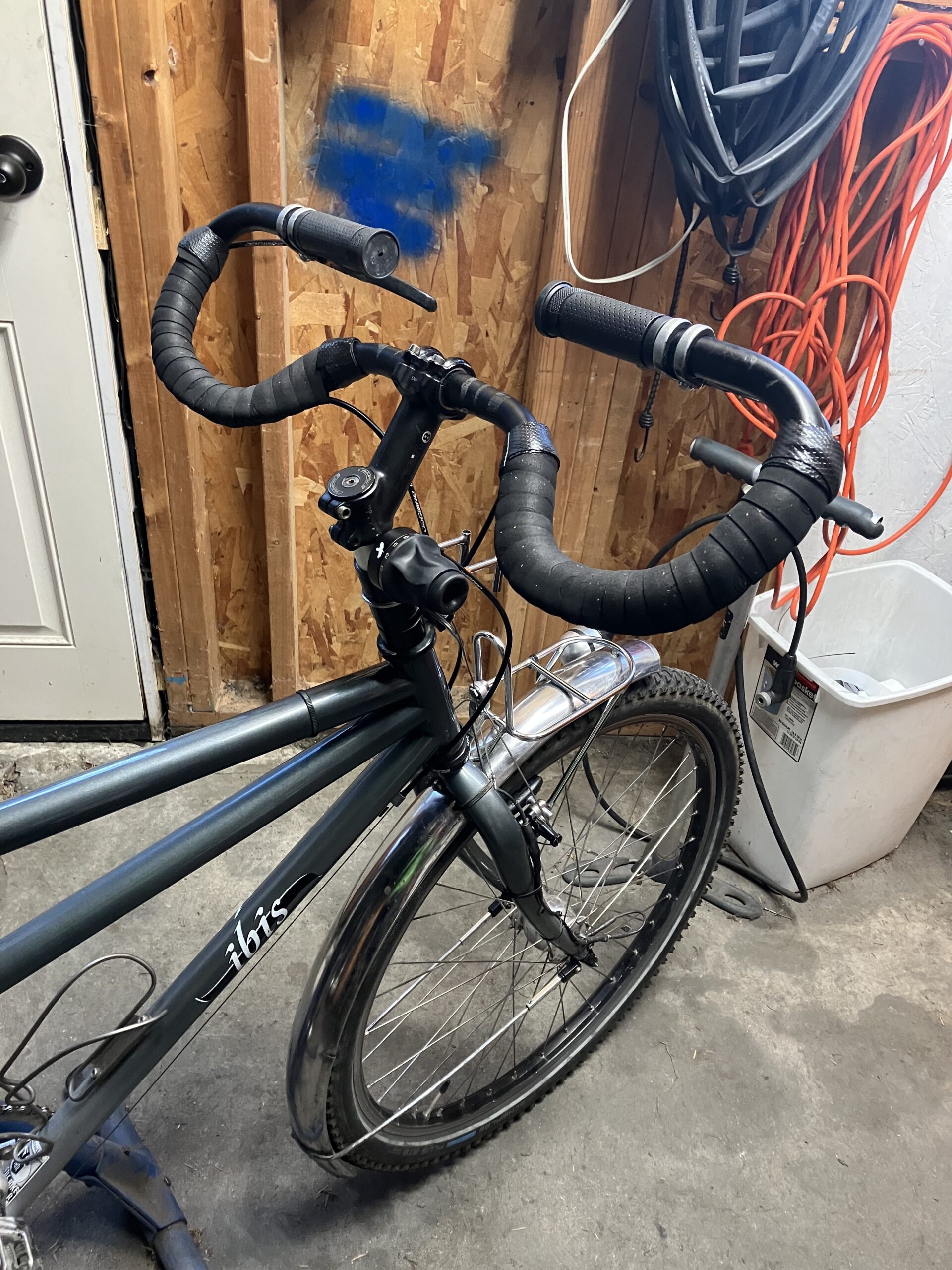
I had a few options for mounting the twist-shifter but I knew that I didn’t like the way any of the available bars had looked when I had them on the Fuji a decade earlier, and I figured that they would look even dorkier with one twist-shifter appended. After looking at the Velo Orange crazy bars in combination with a rando bag, I decided that it was something I could live with. In preparation for taking the bike in to R+E for a Gebla decommissioning I removed the drop bars with the broken shift lever and installed the crazy bars. I removed the bar tape, partly because it was an ugly hack and partly because I needed to get under it to remove the shifter cable housings. The shifters themselves, DuraAce bar-ends, came off really easily and I remembered that the ends of crazy bar extensions were too small for shifters and I had to ream them out to make the shifters fit. I thought that I could just take the faceplate off the stem and mount the new bars, but the crazy bars apparently had a clamp area that wasn’t 31mm (I had a stem with a 26 mm clamp that worked so I assume that they are 26mm bars.) The stem I found with a clamp that worked had a lot of offset – probably close to 100mm. I had to fiddle around with the rear brake to get it to pull properly but the whole process was pretty painless. I rode the crippled, tapeless, Ibis over to R+E (down the hill on 73rd!) and the brakes worked ok but I had to reach really far forward to pull those reverse brake levers. I had R+E order a Rohloff shifter and install it for me using their proprietary “doohickey” to mount it on the stem instead of on the bars. A couple of weeks later I found the extra parts – including a shifter – from when I originally had the Gebla system installed. At some point I realized that without shifters on the bars I could swap them for different bars really easily. I toyed with the idea of upgrading to Rivendale bars with a lot of raise, but decided to hold off on spending any money.
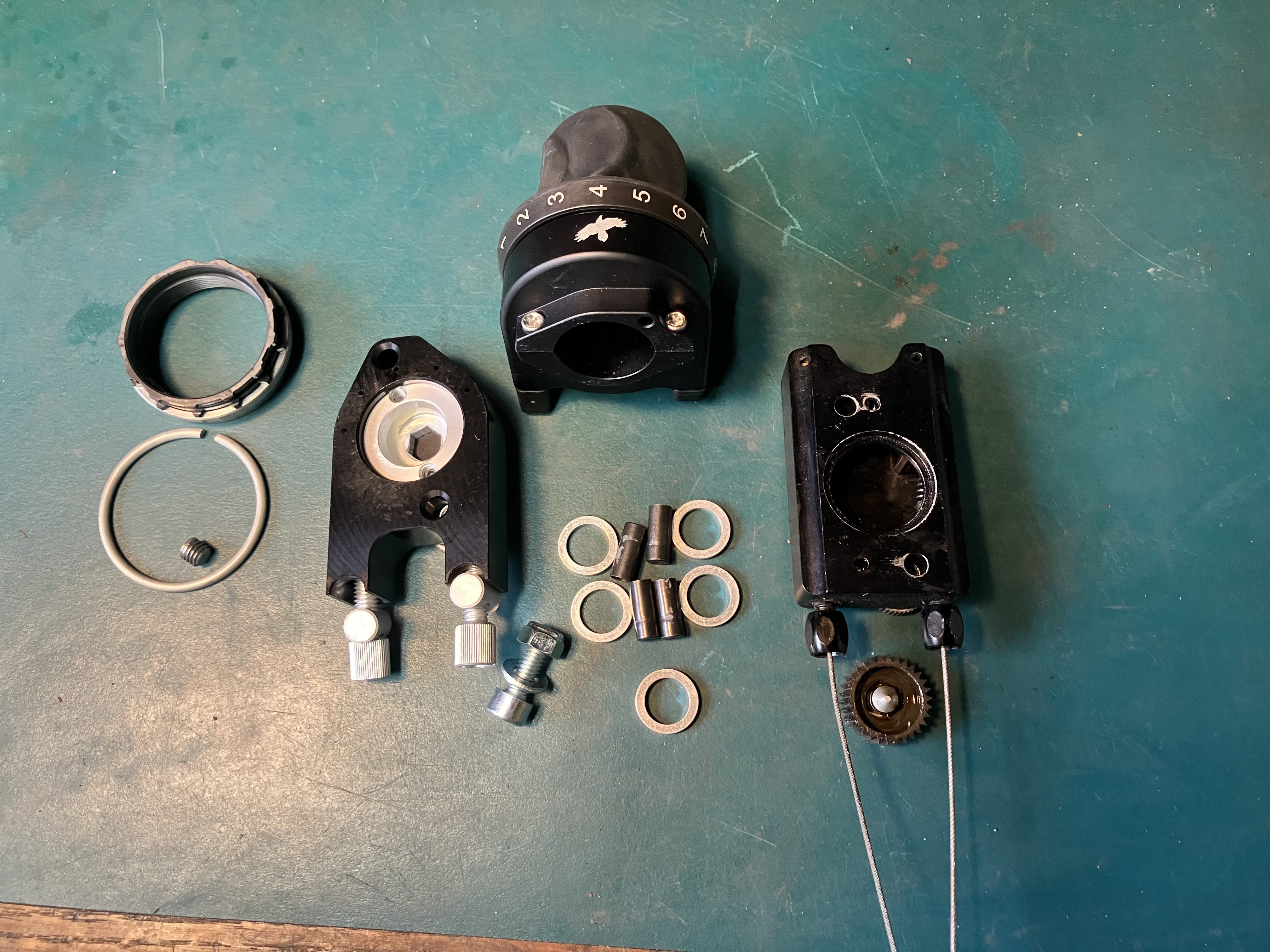
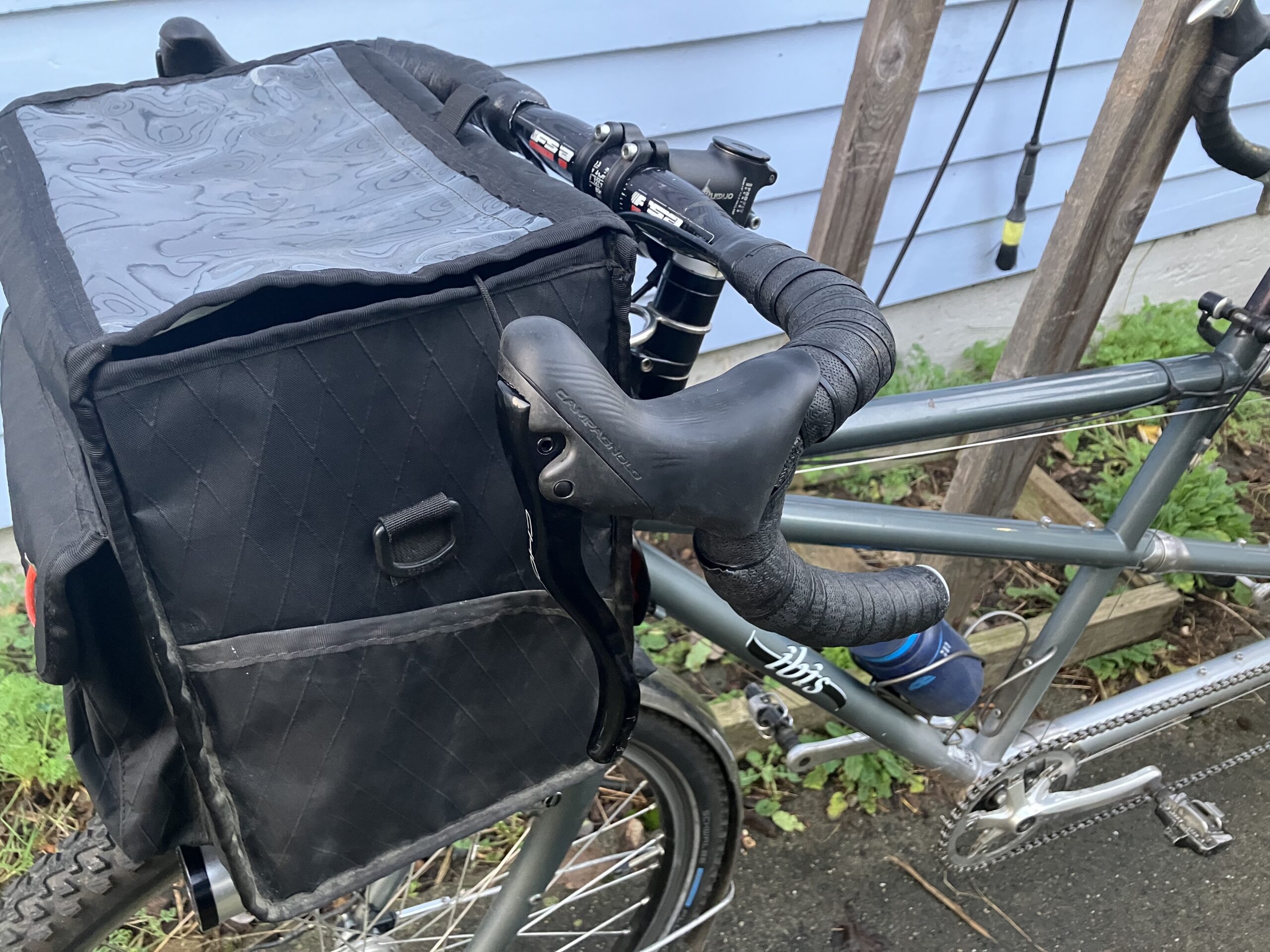
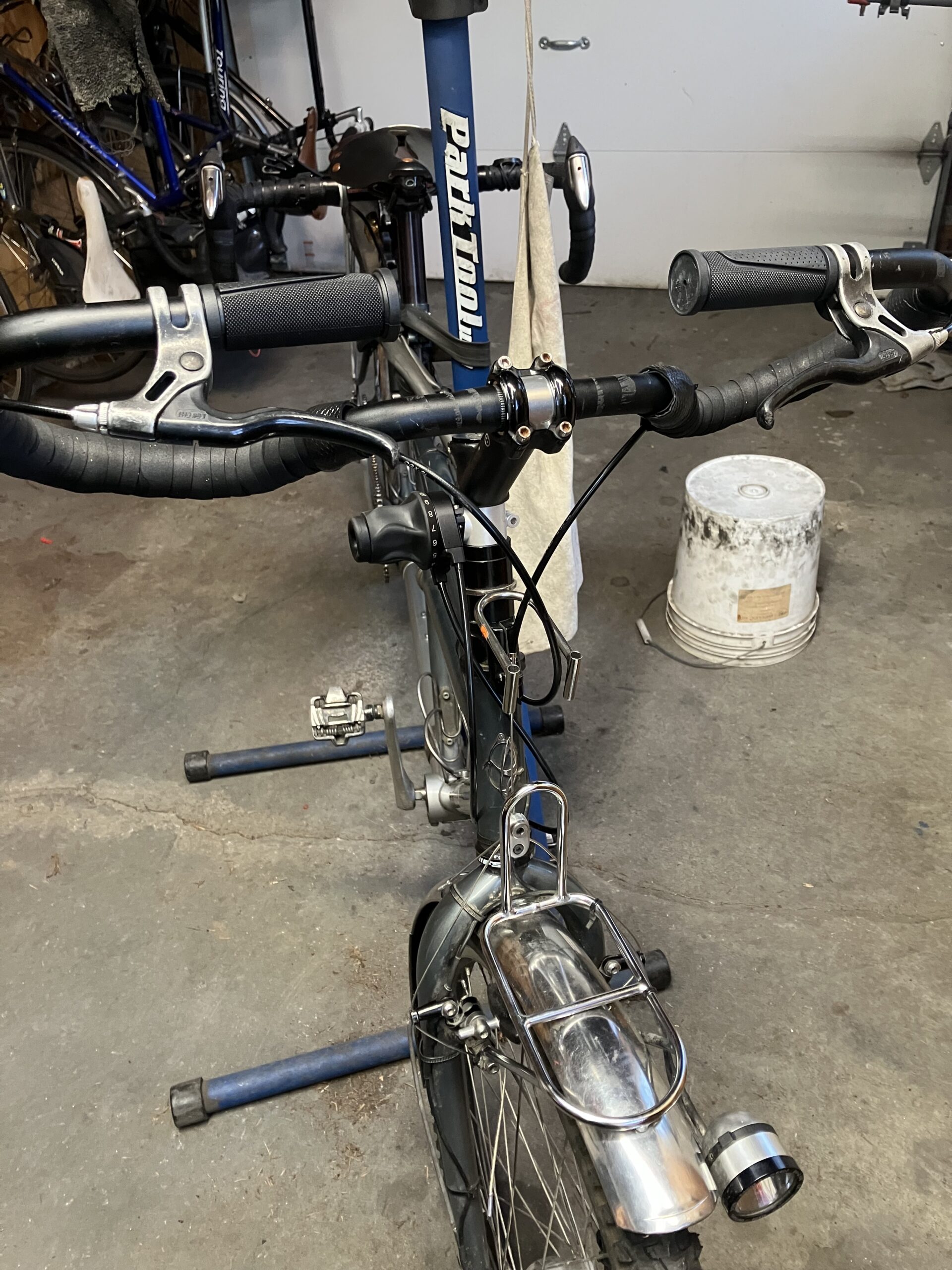
When I got the Ibis back with the twist-shifter mounted on the stem it seemed like a new bike. First, it shifted easily and cleanly. Second, I could see what gear I was in on the shifter and could tell Odette that I really was shifted down enough as we started up hills. The reach for the brakes was definitely too long and I kept moving my hands to where I expected the drops to be – especially on that first thrust when I got out of the saddle to climb. I gathered up all the spare stems I had and found a Cannondale stem with very little offset and a 26mm clamp. I swapped out the stem and tilted the crazy bar horns up by almost 45 degrees. I found the stem that had originally been on the drop bars and mounted it on those bars again. I took the 26mm stem that I’d replaced with the Cannondale stem and mounted it on a set of K2 flat bars taken off a mountain bike 25 years earlier because they seemed too wide. I ordered a shim so that I could use a 31mm stem with the Prima TTT bars I’d taken off the back of the Litespeed tandem. I still had a couple of stems to work with but no more bars that I wanted to try. (I did have a set of Nashbar butterfly bars but Alder had discouraged me from going that route and I wasn’t sure I really wanted to put any energy into them because I hadn’t cared for them when I had them mounted on the Fuji.)
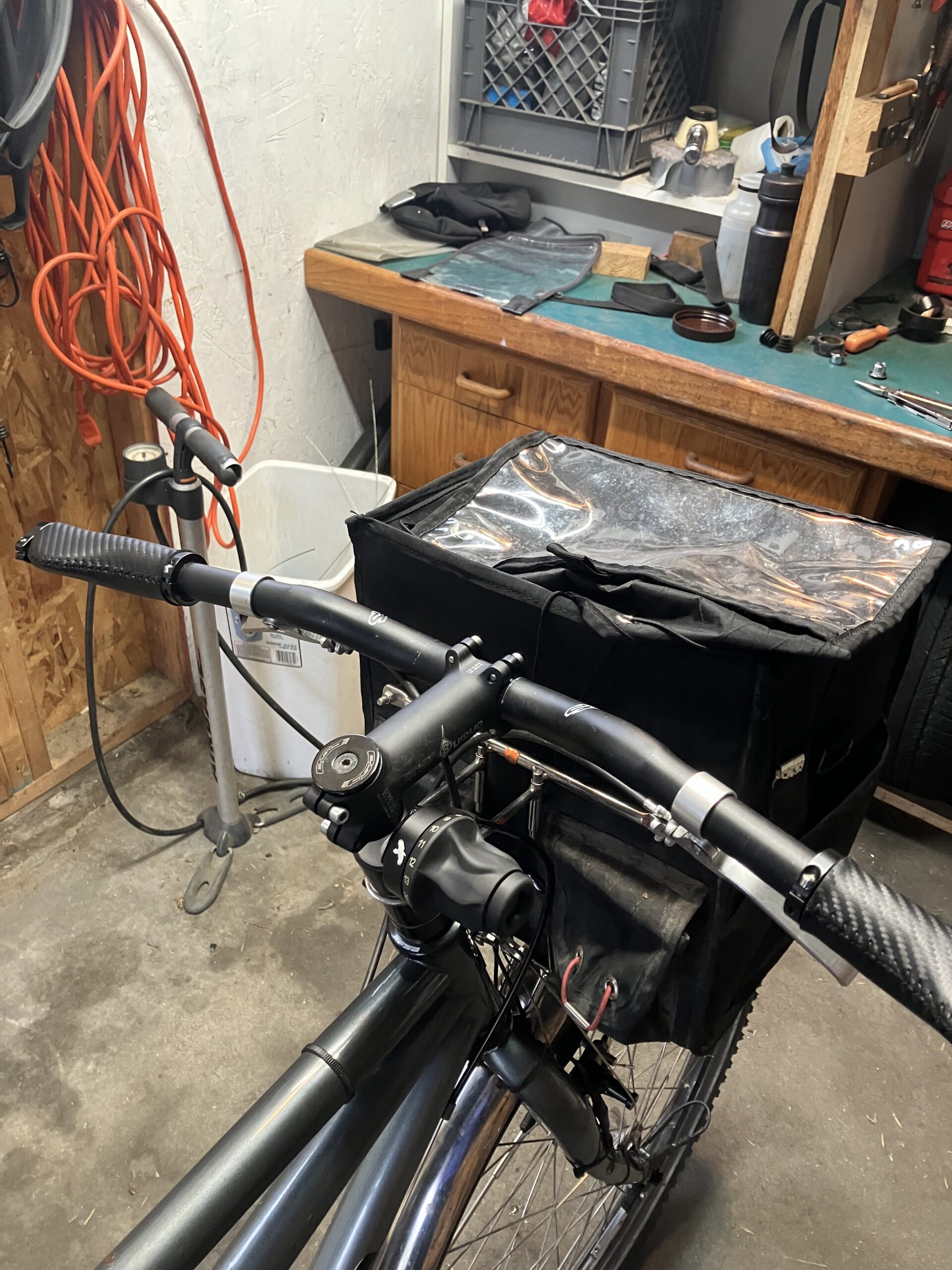
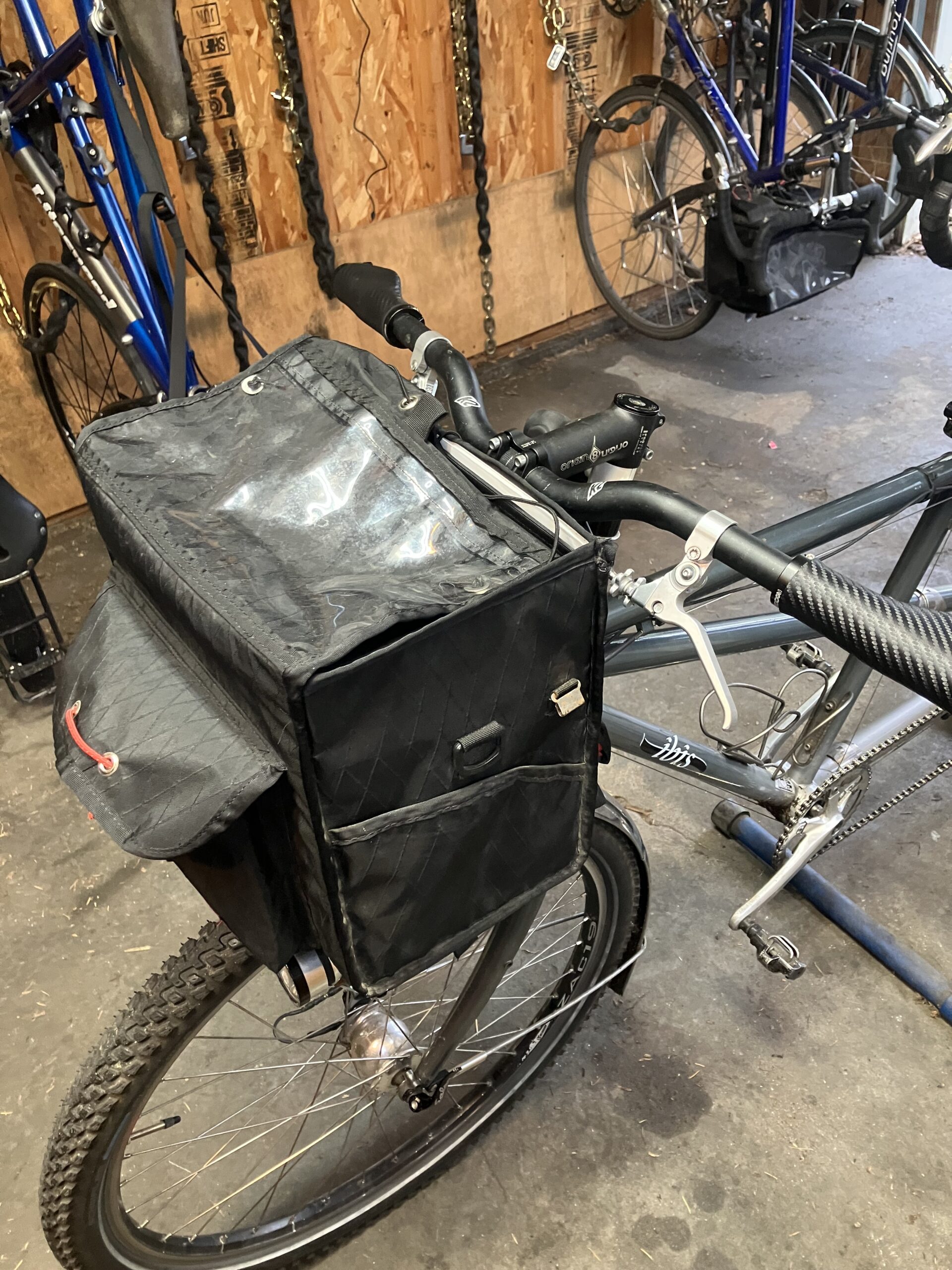
The next ride we took on the Ibis was much better – the flats were closer to me and comfortable as a hand position and the levers were just about where you’d find them on a set of drop bars. I took the Pauls Component levers off of the butterfly bars and mounted them on the flat bars. I figured that hooking up the brakes to those levers wouldn’t require much – the straddle cable was already connected on the front cable so that wouldn’t need anything more than repositioning the knarp to adjust the length of the straddle. The cable on the rear brake lever had been sized for the Fuji – a single bike – and unless the cable splitter was pretty far forward I’d need a longer cable for the tandem. Of all the cables to replace, though, the rear brake cable is the easiest.
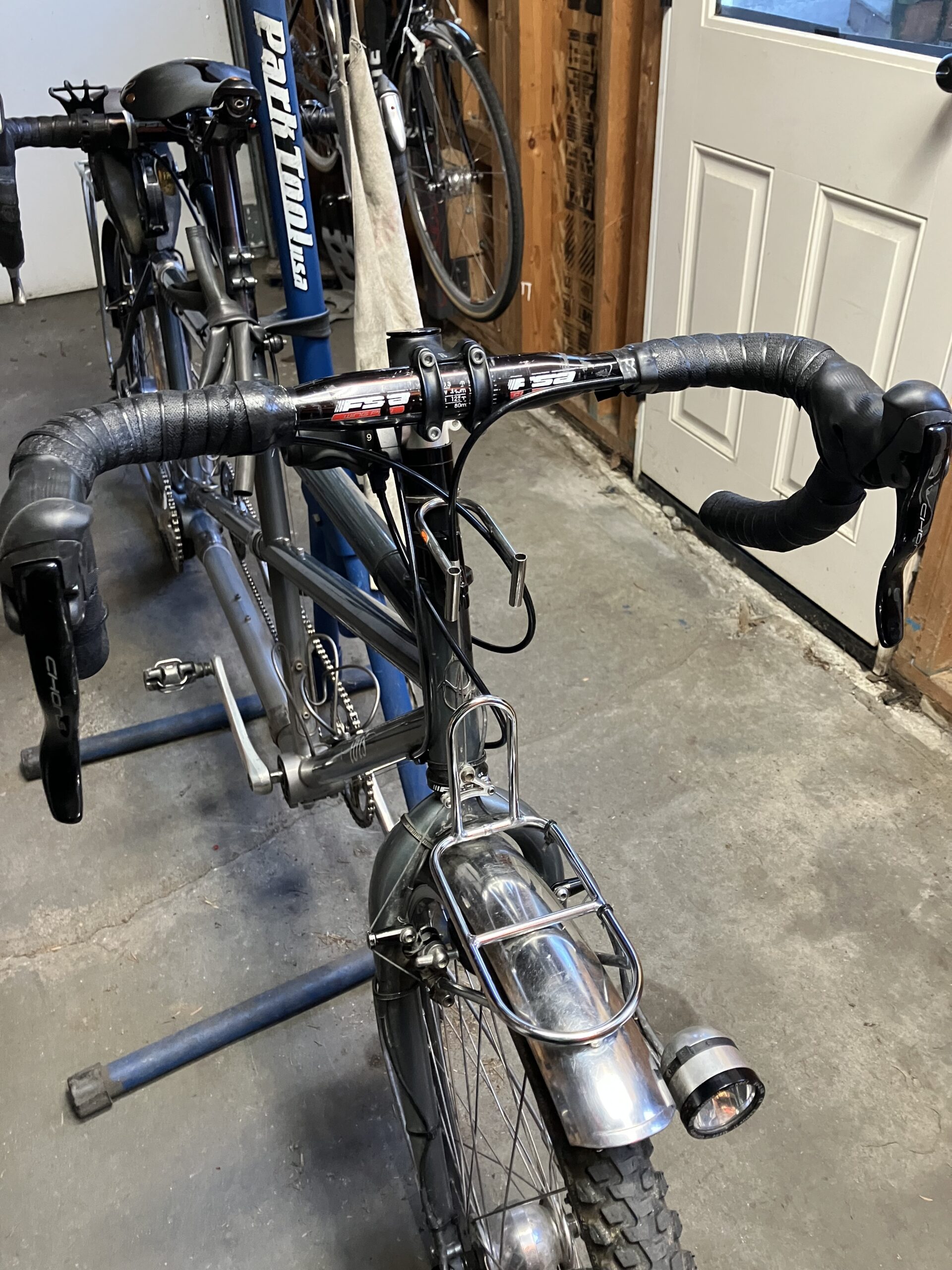
Before I took off the crazy bars to mount the flat ones, I figured I would take a look at what would be involved in installing a set of drop bars. I sorted through my collection of brake levers and found that I had the Dia Comp levers that were original to the Ibis as well as a set of drilled Dia Comp 202 knock-offs (Origin8?) that had originally come on the Centurion. I also had the levers from a Giant Rincon that were pretty rough looking but might work on flat or trekking bars, and several sets of brifters. I mounted the drilled levers on the Prima TTT bars and they fit just fine. Then those brifters got me thinking…
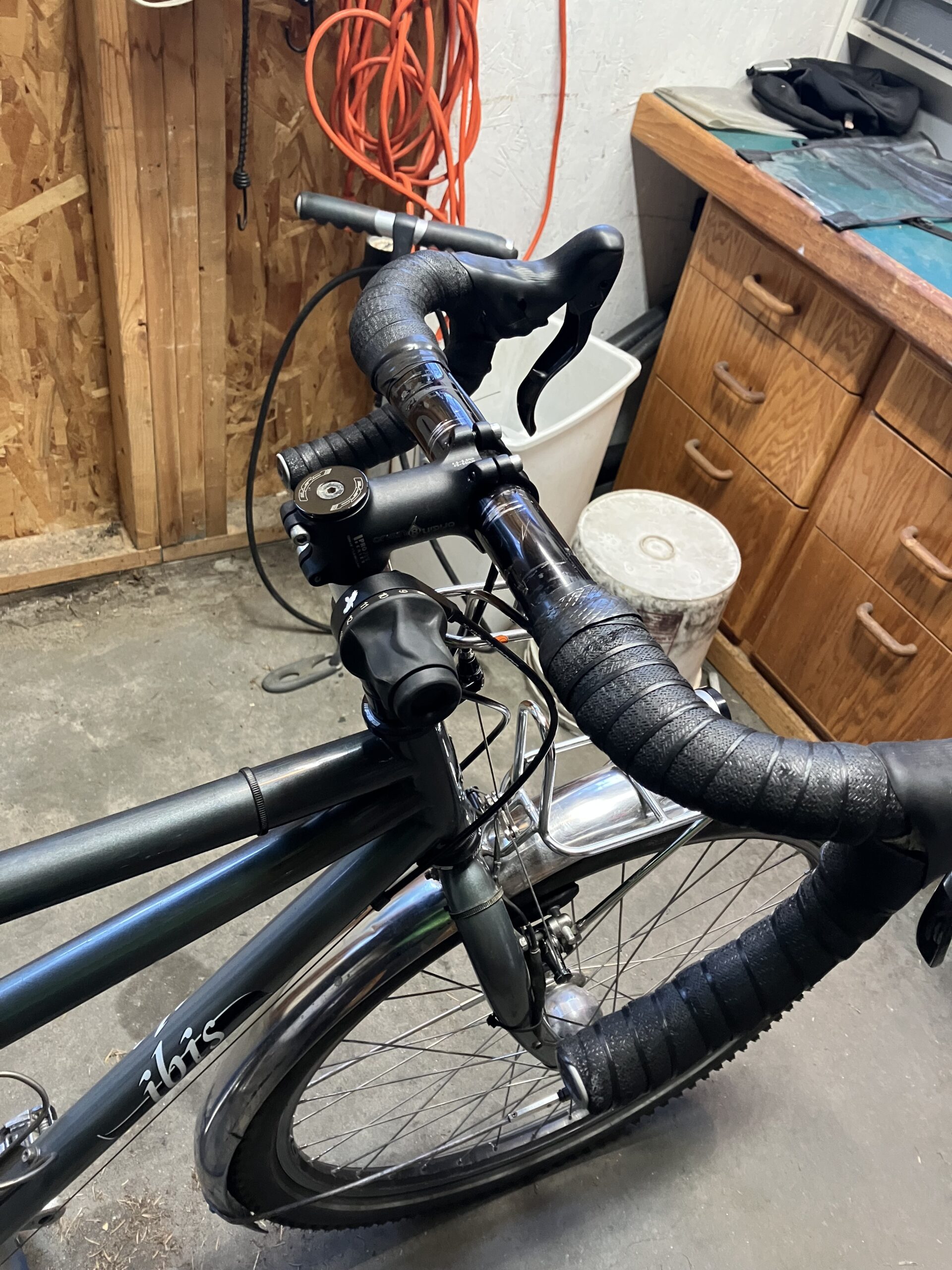
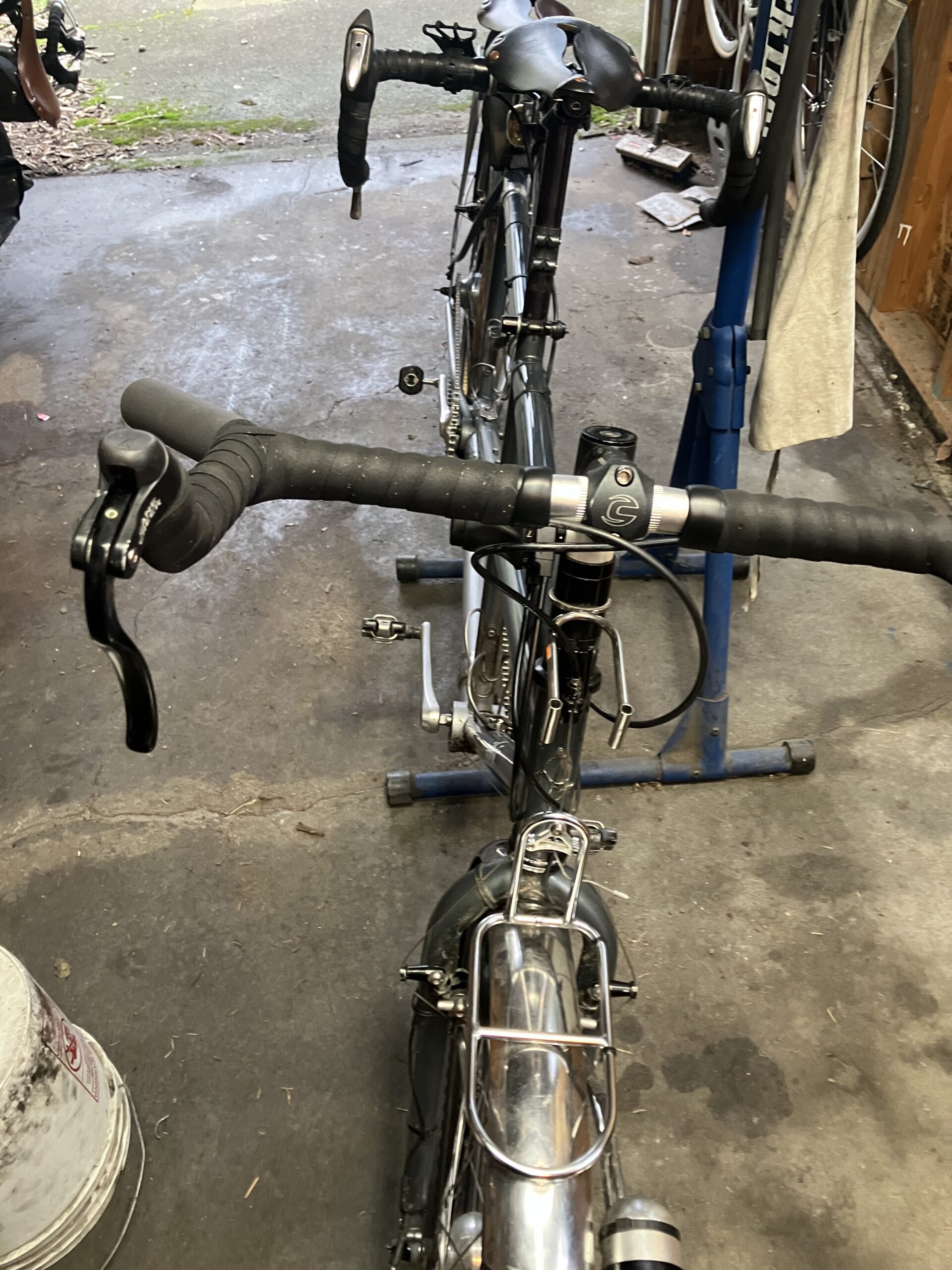
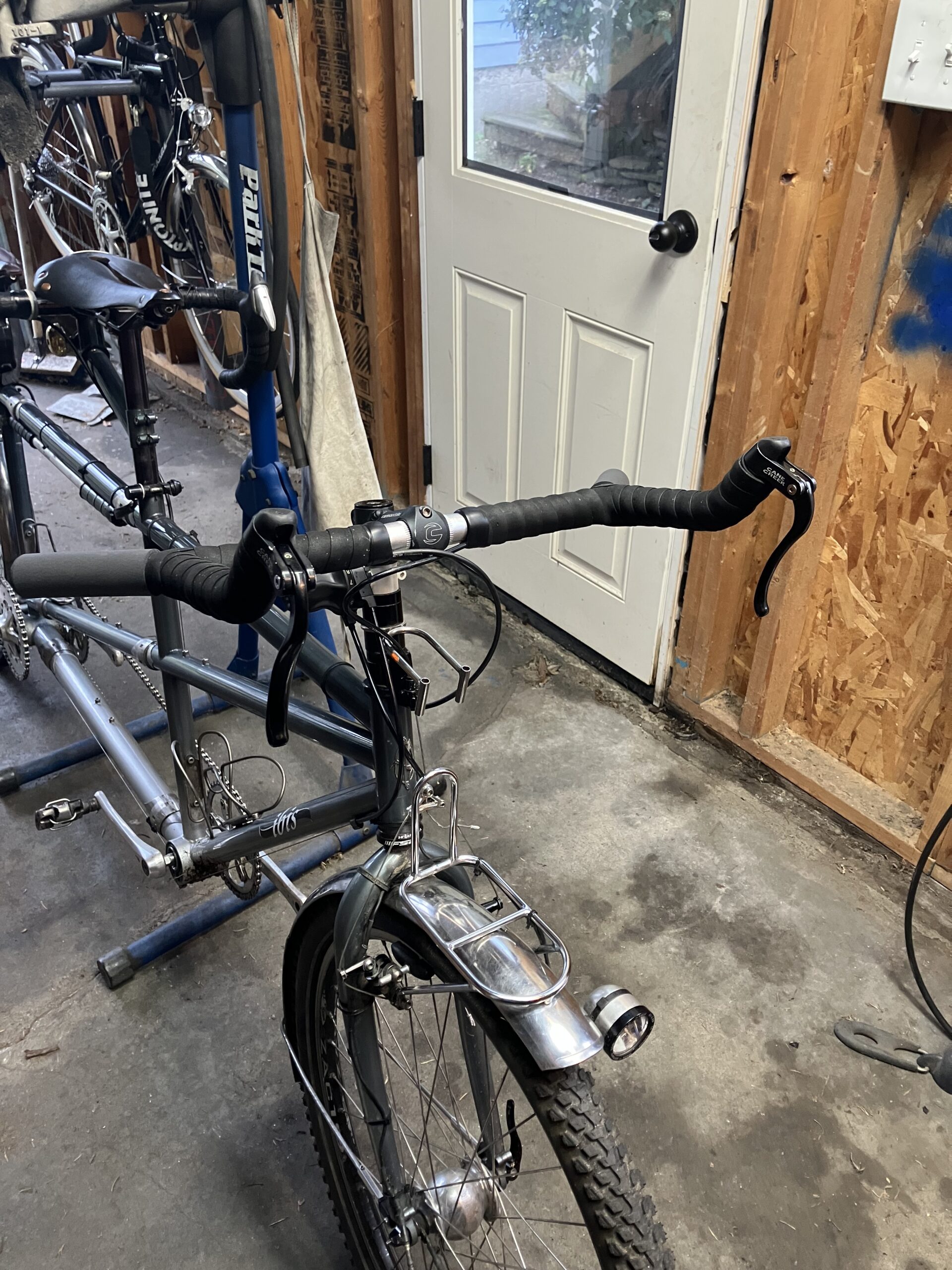
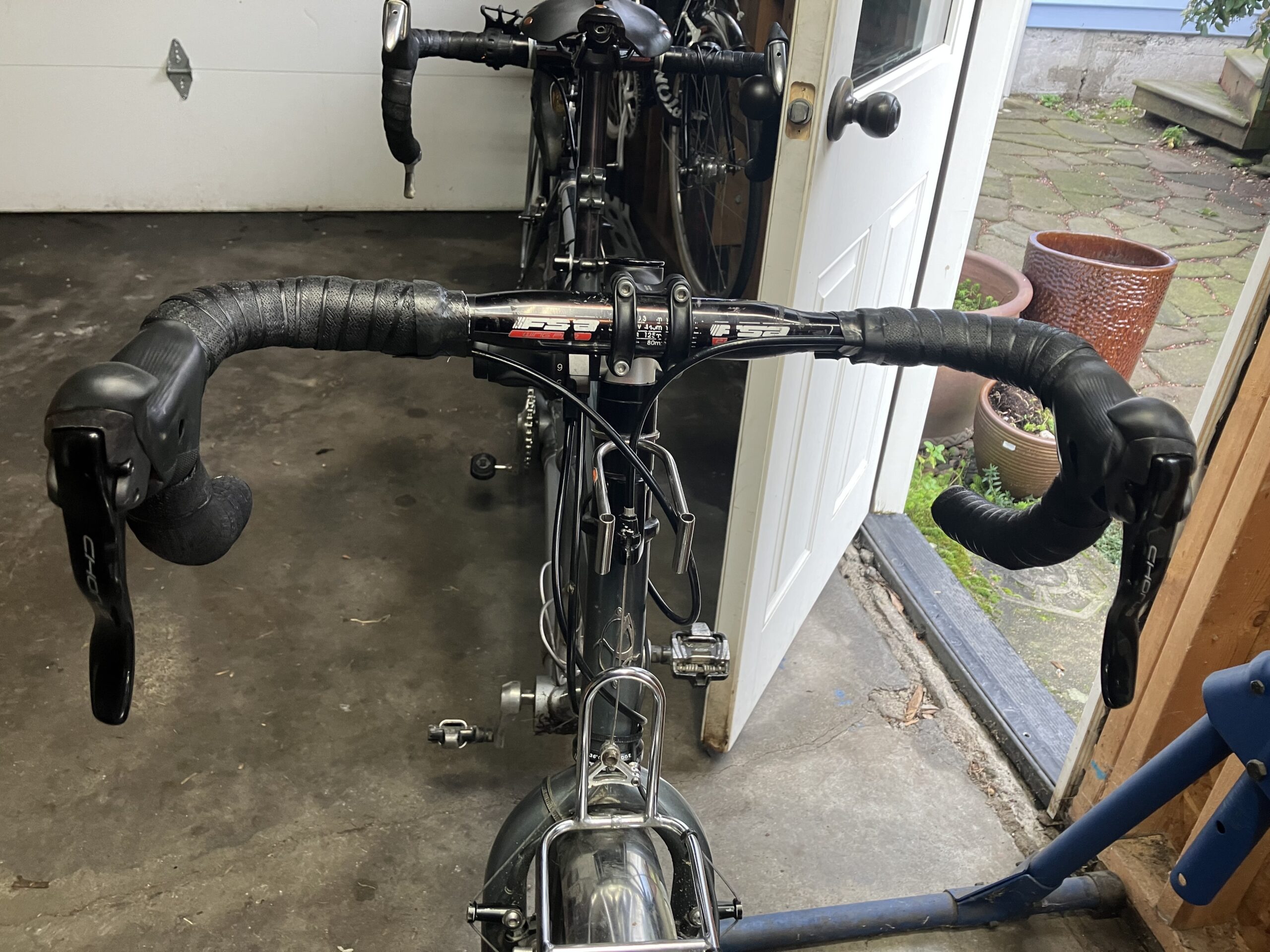
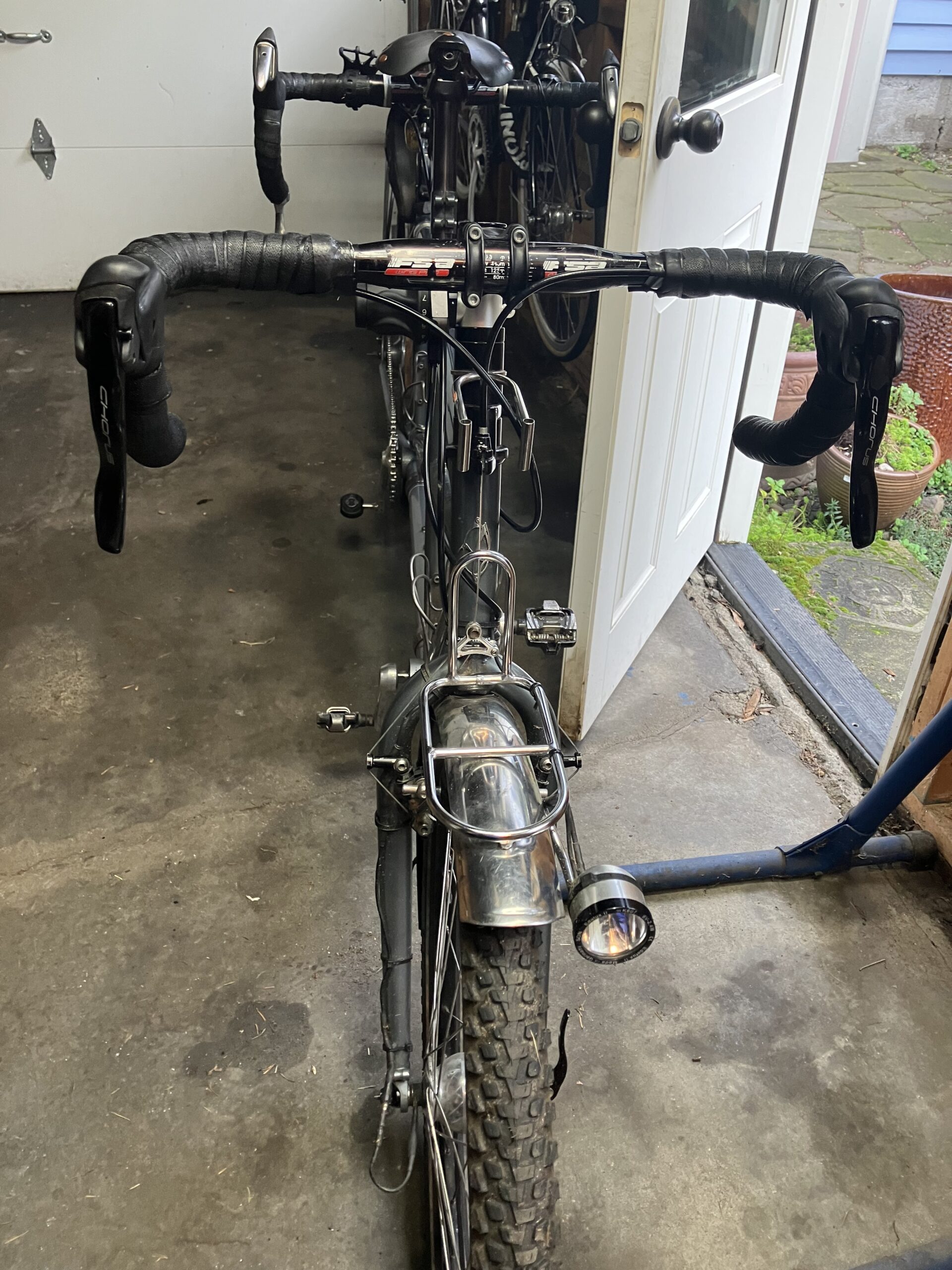
I took half the tape off of the drop bars that I’d removed from the Ibis. (FSA Wing Pro alloy bars – nice because they have really big flats and shallow drops.) I unmounted the right hand brake/shift lever and removed the downshift internals. I had to buy a torx screwdriver set (a whole $10) but one screw and the upshift internals came out too – and then I removed the other half of the bar tape and the shifting mechanisms on the left hand lever. The only broken part I could find was a spring on the the downshift internals – and I may have broken that figuring out how to get the mechanism out. I remounted the levers and rewrapped the bar tape I’d removed. The cannibalized brifters actually looked really good. Since those bars and levers had come off of the Ibis I figured that I wouldn’t have any adjusting to do to put them back on – and that proved to be the case. I rode the bike around the block and it felt good (better than with the crazy bars.) The bar tape needs to be redone (I bought new tape but didn’t want to use it until I was sure I was done moving the levers around.) When I hung the bike back up I remembered that Jan Heine’s blog had a recent post about the advantages of cantilever brakes where he described four of his bikes with cantis, two of which have campy levers with the internals removed :
The Weigle has Campagnolo 11-speed Ergopower levers with the shifting internals removed. They work the same as the older Campy levers on my Oregon Outback bike—superb.
Mine are 12-speed Chorus levers, but it’s the same concept and the ergo hood shape is definitely more comfortable than those Dia Comp levers, drilled-out or not.
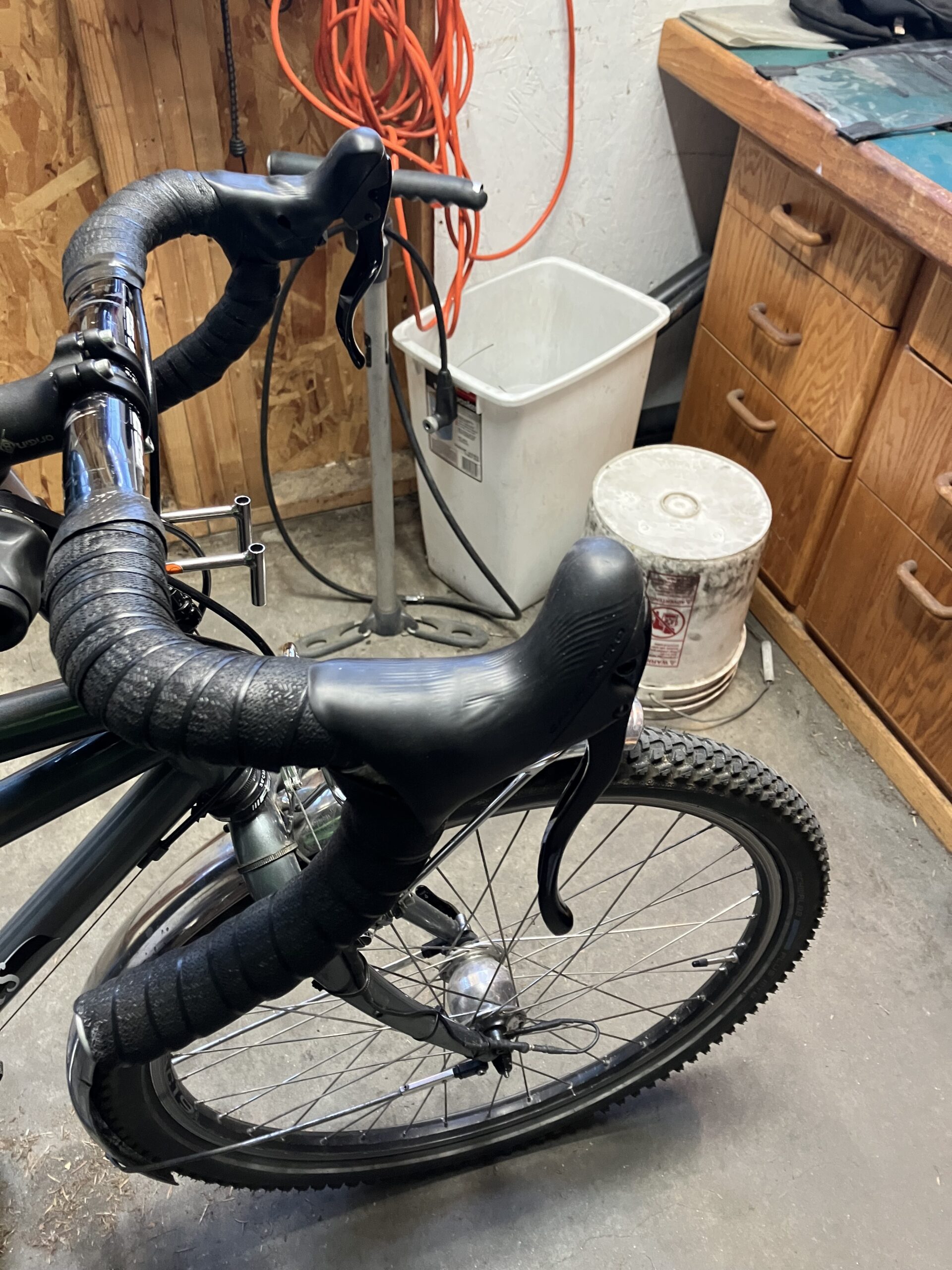
Odette and I rode 30 miles on the Ibis with the drop bars and it felt pretty good. I came away wanting to make sure the bars were straight relative to the wheel and I wanted to adjust the left hand lever so that it didn’t toe-in as much. Our speed was slightly higher than the last time we’d ridden the Ibis but I’m not sure I can attribute that to the drop bars. When we got home I fiddled with the left hand lever and then removed the drop bars and mounted the flat bars. The straddle cable was too short for the brakes to work right and there wasn’t any extra tail, so I replaced the straddle. The housing seemed too long (the straddle was almost at the end of the cable and barely cleared the tire) so I cut about three inches off the housing. The rear cable was too short so I replaced it with a new cable and cut three inches off of that housing to match the one in front. I got the rear cable too short and had to break out a second cable, but in the end both brakes worked and it looked like a reasonable setup. I rode around the block and except that one grip needed to be tightened, it seemed great. I’m not certain that I have the levers mounted where they ought to be but with the shorter housings I probably can’t slide them much further out without new internal cables. It’s clearly not a touring configuration but I could see day trips with those bars. When I finally got the cables adjusted the brakes worked just fine with the MTB-style levers.
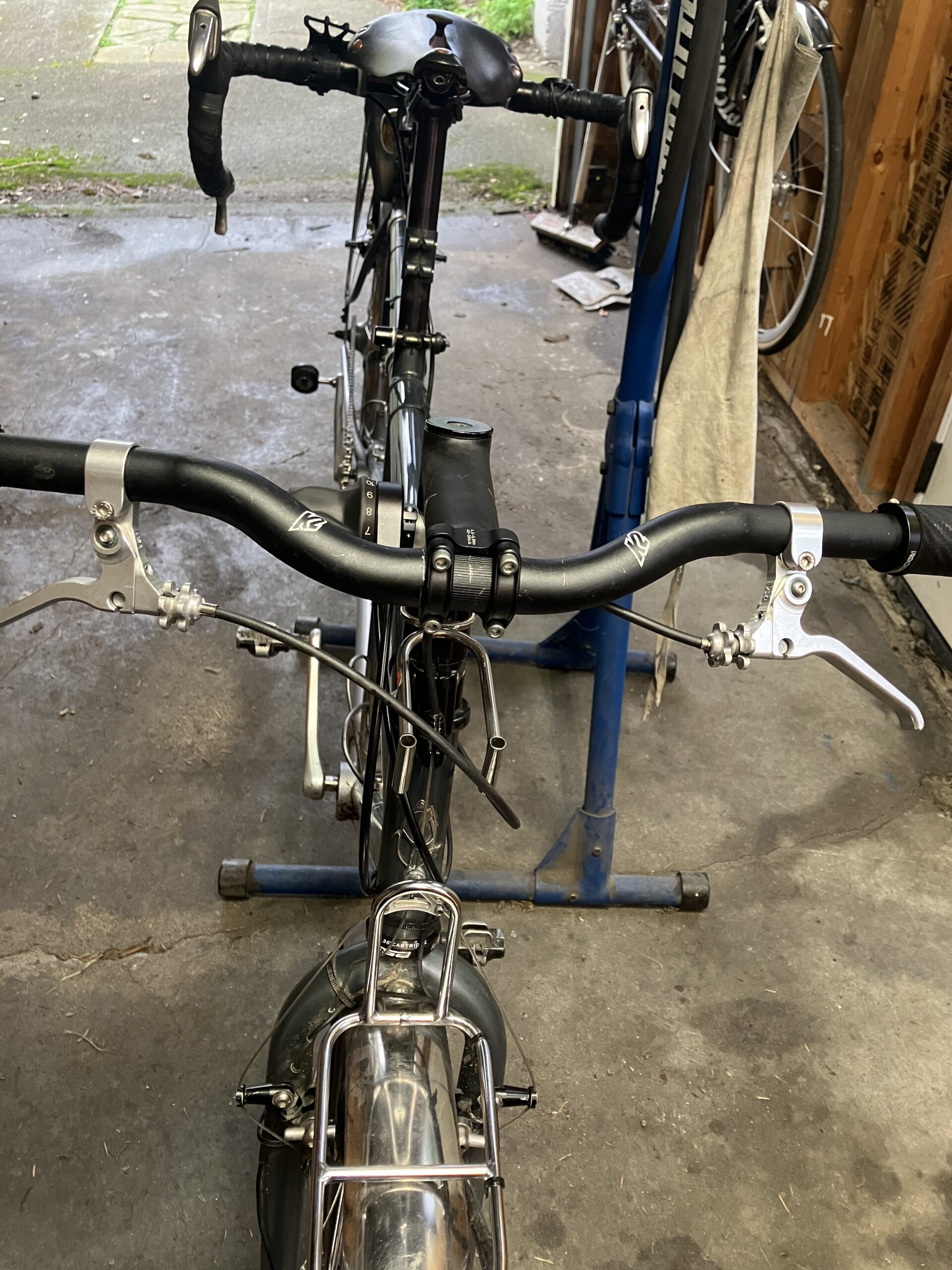
I put the crazy bars back on the bike and figured that I would ride it that way a few times before switching back to the drop bars. When I did this on the Fuji I quickly figured out that even though it was a ten-minute process to swap bars I wasn’t likely to want to keep doing that and settled into a favorite (the drops) pretty quickly. I expect that the process with the Ibis will be similar.
Before hanging up the Ibis I spent a little time with the butterfly bars. I removed the bar tape and held them up to the bike to look at how they would fit. The right hand bar end would make it hard to access the twist-shifter if they are installed in the conventional way. I could install them so that the ends go forward and up at an angle. but I wonder if they’d end up too far forward for a comfortable reach. I tried to slip the Giant levers on and couldn’t get them around the first bend. I’ve got a shim coming so that I can mount them with a 31mm stem, but I’m not inclined to take it much further.
Late in January I hesitated to head out on a frosty morning and decided to fiddle with the butterfly bars while I waited for it to warm up. I found several scraps of brake cable, including one that was long enough for a rear brake run. I found a Campagnolo straddle cable carrier! I found a Knarp and fabricated a straddle cable. By the time the white had melted out of the back yard, roughly two hours, I had a working bar option that just needed final adjustments and bar tape. The grips are small and the levers really ought to point in the other direction, but I think that this set up will work and it doesn’t get in the way of the shifter knob. I need a ride to assess the reach, but I think I’ll tape the bars first.
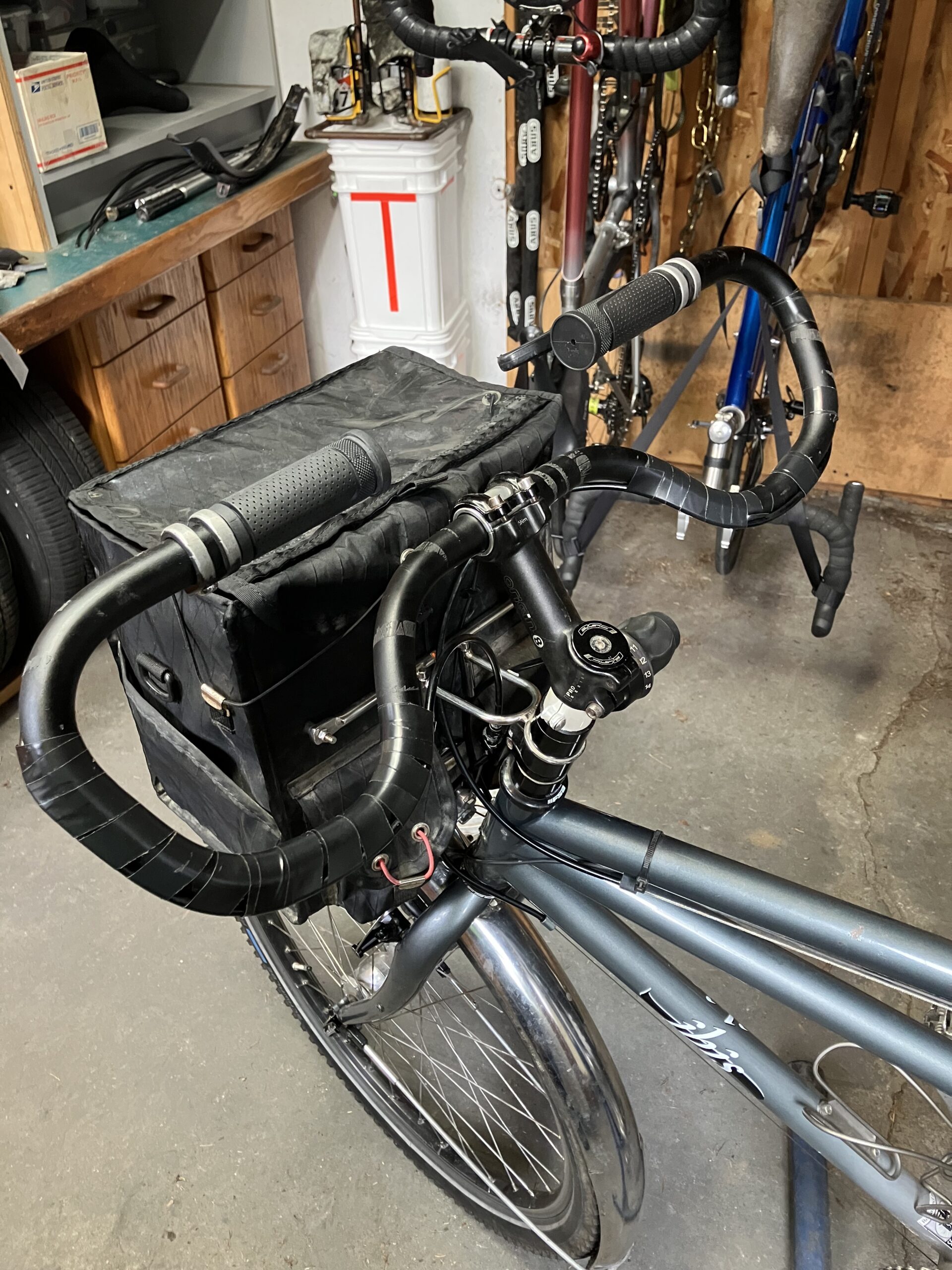
The next day was similarly frosty so I fiddled with the bike for an hour or so before riding. I taped the butterfly bars, which was interesting to do in the cold. I cut about a quarter inch off the rear brake cable and when I put the brakes back together again they seemed to be about right. I rode around the block and everything felt fine, although would take me a while to get used to that lever position. I removed the butterfly bars and mounted the drop bars and rode around the block again. Eventually I suppose I ought to re-tape those bars, but they don’t look too bad and they work just fine.
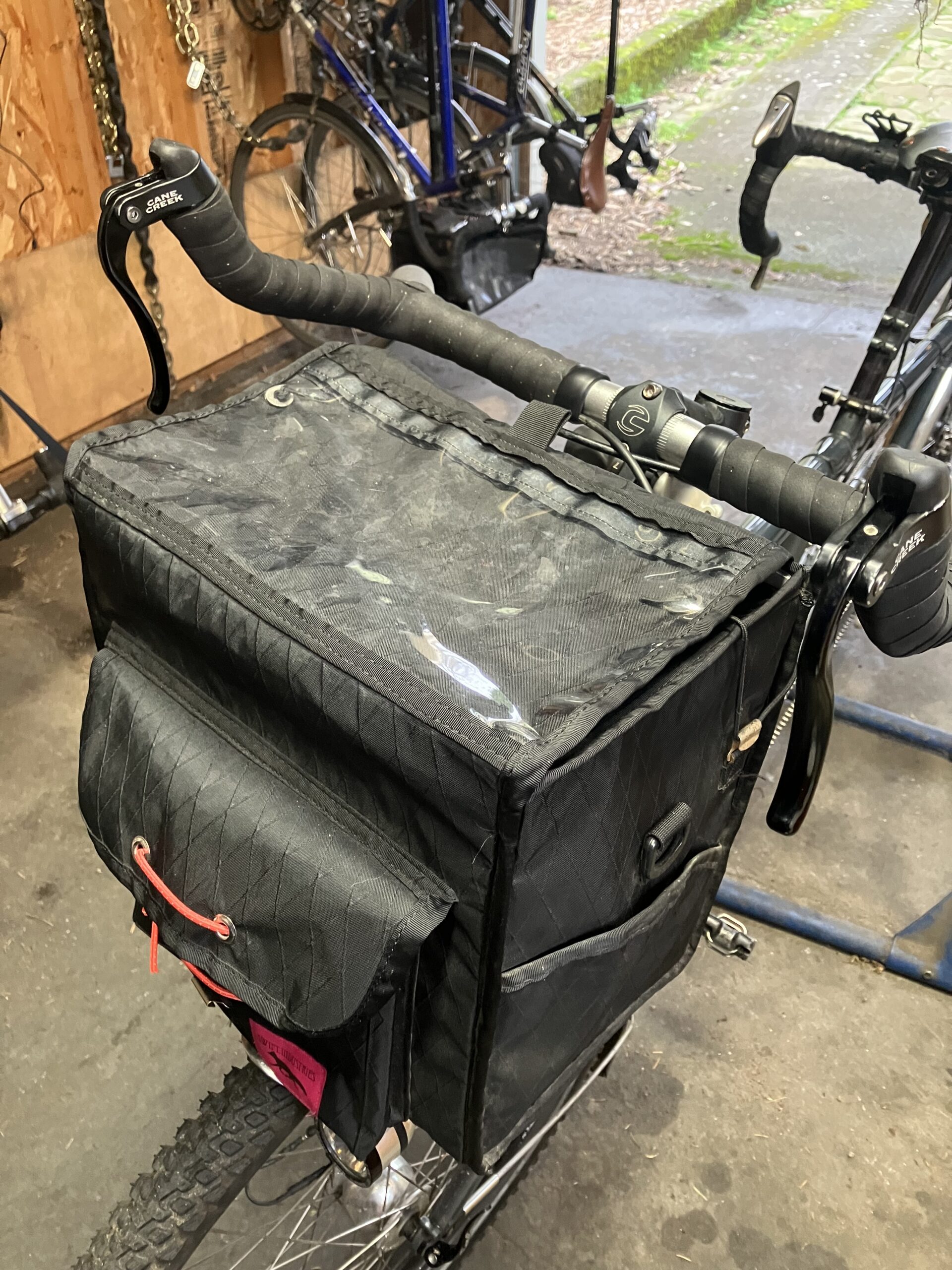
So now I have a Rohloff equipped tandem with four handlebar sets configured for quick changes. I really can’t justify three tandems and the Ibis is probably the first in line when I go to sell one of them. I’m not likely to do a lot of handlebar switching but to be honest I’m not likely to sell the bike soon, either. That’s probably a pretty good place for me to be and now I need to settle on the next project.