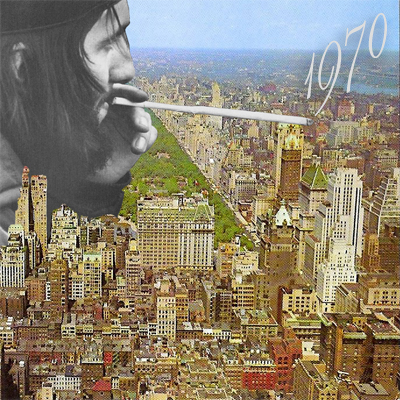
Artist : Various Artists
Album : Holding Back The Years: 1970compiled by viker
Track Listing
————-
1. Move On Up (Curtis Mayfield) (8:54)
2. Cynthy-Ruthy (Black Merda) (2:53)
3. Gold Mine (Jackie Mittoo) (2:33)
4. Pressure Drop (Toots & The Maytals) (3:01)
5. Woe-Is-Uh-Me-Bop (Captain Beefheart) (2:04)
6. Think She Knows Me Now (Mike Cooper) (4:24)
7. Let It Bleed, Genevieve (John Phillips) (2:55)
8. Sweedeedee (Michael Hurley) (5:23)
9. I Wonder (Rodriguez) (2:34)
10. Zoom! Zoom! Zoom! (The West Coast Pop Art Experimental Band) (2:11)
11. Express Yourself (Charles Wright & The Watts 103rd Street Rhythm Band) (3:49)
12. Mercy (Variation No. 1) (Demon Fuzz) (9:39)
13. Down On The Street (The Stooges) (3:43)
14. I Got A Thing, You Got A Thing, Everybody’s Got A Thing (Funkadelic) (3:53)
15. I Can Be Cool (Bob & Gene) (3:08)
16. O Me-O, My-O (Lee Dorsey) (2:43)
17. Go Out & Get It (John & Beverley Martyn) (3:09)
18. Dambala (Exuma) (5:39)
19. L’home Estatic (Pau Riba) (6:53)Total Playing Time: 79:37 (min:sec)
Total Size : 133.7 MB (140,244,914 bytes)Notes:
With 1970 came the dawn of not only a new decade but what would ultimately become an era of great change in almost every facet of modern life as we know it. The 60’s were a breeding ground for chaotic events, and these things would only intensify in the years to come.
More and more people began to grow disillusioned with government: many were getting very tired of wars, scandals and mistreatment. Civil rights, women’s movements, environmental concern, space travel and other once radical ideas began to become more and more accepted and resulted in a flourishing culture – something that no doubt had great influence on many things worldwide, and more so than possibly anything else was music.
—————————-
01. Curtis Mayfield – Move On Up (Curtis)
Mayfield had made a name for himself while working with The Impressions, and Curtis (his first solo album) proved that he was in fact one of the greatest all around musicians of all time. On this album Mr. Mayfield pulled not only current political events to inspire his songs, but also used top of the line production methods while embracing both the most progressive soul sounds of the time while also clinging tightly to the most wonderful R&B sounds from the past.02. Black Merda – Cynthy-Ruthy (Black Merda)
The members of Black Merda, heavily influenced by the acid guitar rock of Jimi Hendrix, were masters of the current psychedelic funk craze that was floating around at the time – with peers like Funkadelic and Sly & The Family Stone leading the way. Though they had signed to Chess, who released their self titled debut, notoriety never came.03. Jackie Mittoo – Gold Mine (Coxone 7")
Already a legend in 1970 for being one of the founding members of The Skatalites, Mittoo was unrivaled when it came to keyboard skills and writing and was a very sought after musician. In 1968 he moved to Toronto, Ontario yet continued to travel back to Kingston where he had close ties with Coxone Dodd & Studio One, where this single came from. After traveling to England and other areas to cut LPs with other Reggae greats, Mittoo joined several other original members of The Skatalites in a 1989 reunion that was unfortunately cut short: he died of cancer in 1990.04. Toots & The Maytals – Pressure Drop (Monkey Man)
Bob Marley may have all the attention and wear the crown of reggae, but Toots & The Maytals were no brush off when it came to Jamaican music. Renowned for being one of the tightest, strong & well-blended vocalists, The Maytals had a passion for their music second to none.05. Captain Beefheart – Woe-Is-A-Me-Bop (Lick My Decals Off, Baby)
Beefheart & Co. continued to further explore musical ideas, beyond the already imaginative Trout Mask Replica. Here they find a stronger self-assurance and darker material as well as songs that focused purely on strange wordplay – though the most important part may be the astounding complex rhythms and guitar work. However, Woe-Is-A-Me-Bop is far different than most everything else on the album: a fairly straightforward song that sticks to one melody throughout the duration of the song – something not seen much since Safe As Milk.06. Mike Cooper – Think She Knows Me Now (Do I Know You?)
Not many are as responsible for the blues-folk fervor that was found in 1960s England as Mike Cooper. His knowledge of techniques used by highly touted blues musicians of the past as well as his amazing songwriting skills pushed him very near the top of any list regarding the matter. Dawn Records produced a few astounding albums with Cooper over the next few years, this being his first. These songs of hybridized blues/folk showed that he was a strong force and only hinted at the legendary Trout Steel that would appear the following year. A special thanks to Eerowen for hippin’ me to one of my now all time favorite songs by including it in one of his early #it mixes.07. John Phillips – Let It Bleed, Genevieve (John Phillips aka John, The Wolf King Of L.A.)
Curtis Mayfield wasn’t the only artist trying to make a solo impression on everyone after departing from a legendary band. Phillips, a founding member of The Mamas & The Papas, gave birth to one of the greatest musical events of 1970 when he released his self titled debut. All star musicianship, strong writing and great vocalizing on Phillips behalf leave an excellent album to be heard. Let It Bleed, Genevieve was a song he had written to his future wife and is wonderful portrait of a woman trapped among the rock & roll elite and displays a bit of period charm.08. Michael Hurley – Sweedeedee (Armchair Boogie)
An imaginative folkster with close ties to the Greenwich Village scene of the 60’s, Hurley had more notoriety for his writing skills than anything else. Hurley was a frequent contributor to The Holy Modal Rounders though still fairly inactive throughout much of the 60s & 70s, despite joining other Modal members on Have Moicy which was critically acclaimed and up for album of the year honors in 1976. Hurley continues to make quirky, delightful music to this day and has had a recent surge of popularity from fans of Cat Power and Vetiver, who covered a few of his songs in the past few years.09. Rodriguez – I Wonder (Cold Fact)
Why Sixto Rodriguez never made it big is beyond me, particularly with such gems as Cold Fact out there. Another artist who was signed to a major label, Rodriguez never had much of a fanbase outside of South Africa and Australia. With catchy and concise songs Rodriguez crafted a somewhat eccentric offering dealing with alienation and putdowns of normal society and the tensions found within it. Maybe not as great as Skip Spence or a couple other psych/folk/rock luminaries, but worth every bit as much attention.10. The West Coast Pop Art Experimental Band – Zoom! Zoom! Zoom! (Markley, A Group)
Although considered quite average in the realm of psychedelic groups, this band and its mysterious group of players took great pleasure in performing the era’s standardized usage of folk-rock and trippy lyrics, but at the same time created a great identity of their own. Despite its often over-the-top trendiness, a lot of their material holds quite well to several other acts of the early 70’s, and in this case their averageness is a very good thing.11. Charles Wright & The Watts 103rd Street Rhythm Band – Express Yourself (Express Yourself)
Express Yourself may now be most famous for being sampled by N.W.A. or being used in 70’s themed movies but Charles Wright penned a very danceable yet politically charged tune regarding the expanding freedom for African-Americans and the choices and dreams that they were finally able to take hold of.12. Demon Fuzz – Mercy (Variation No. 1) (Afreaka!)
The sole output from this tripped-out jazz fusion band has been gaining notoriety over the years as being a great album for DJs to sample – something first done by Gilles Petersen several years ago. Afreaka! is a wild trip with hints of Latin funk, breakbeats, and psychedelic-tinged soul and is one heck of a freaky-deaky album which shouldn’t be missed.13. The Stooges – Down On The Street (Fun House)
Arguably the greatest album released in 1970, Fun House brings forth many new ventures in music in that it shows the ‘death’ of the hippy culture is imminent (both in song & lifestyle) and paves a path for the hard rock and punk movements that would rise up in the coming years. Iggy Pop was a great frontman whose over the top stage antics complete with yelps, growls, mustard and razor blades were often the center of attention at their shows and gave many budding artists grand ideas as to how to just how wild singers could be. That presence coupled with the great musicianship of the Asheton brothers is one of the many reasons The Stooges and their music has continued to be popular favorites.14. Funkadelic – I Got A Thing, You Got A Thing, Everybody’s Got A Thing (Funkadelic)
Parliament took center stage more times than not for George Clinton, but Funkadelic was a great project for him where he could lay down his political views and put more focus on the psychedelic aspects of his songwriting – something that grabbed the attention of just as many listeners. With their self titled debut, Funkadelic expanded the acid rock/soul style set down by Jimi Hendrix & Sly Stone while also keeping focus on its R&B roots, something the group never really kept in their later recordings – leaning more towards a unified P-Funk style with every record.15.Bob & Gene – I Can Be Cool (If This World Were Mine…)
Not commercially known during their time at all (in fact, If This World Were Mine didn’t even get published until more than 35 years after the recordings on the Daptone label), Bob & Gene Nunn were teenagers at the time these songs were made, and like countless other youths of the country, they were trying to make a splash into the music biz. What set them apart however was their great songwriting and harmonies – songs about hardship (they lived in a economically fluxuating Buffalo,NY), and the desire of love… nothing out of the ordinary for their brand of heartfelt soul, but surprisingly good coming from two kids. This particular recording may not be important but just goes to show that the ever changing times had profound effects on everyone, even teenagers with high hopes.16. Lee Dorsey – O Me-O, My-O (Yes We Can)
Typically if someone *has* heard of Lee Dorsey, the only thing they associate with him is being the writer of ‘Workin’ In A Coalmine", and although it’s a great tune, it’s the material he did with fellow New Orleans legend Allen Toussaint in 1970 that is his absolute best – even though it was a commercial bomb and to this day doesn’t get as much respect as it should. Not only did Dorsey have Toussaint as a key collaborator, he also had another stellar group from The Big Easy helping him out: The Meters, one of the all time great funk bands. This isn’t just any run-of-the-mill New Orleans funk, it also has hints of the floor stompin’ Stax style, laid back grooves, and protest soul. Yes We Can is an essential soul album that stands out even among the greatest of others during the 70s.17. John & Beverly Martyn – Go Out & Get It (Stormbringer!)
Scottish born blues/folk guitarist John Martyn recorded a couple of great albums in 1970, including this one where he teamed up with his wife Beverly and a couple members of The Band. Though he was highly influenced by blues guitarists like Skip James and Robert Johnson, Stormbringer! saw the emergence of a jazzy feel to it, something that Martyn would delve deeper into in the coming years.18. Exuma – Dambala (Exuma)
In the late 60’s and 70’s major labels often found themselves going out on a limb to sign unconventional acts, in hopes that they will strike gold on the next big thing. Exuma (aka McFarlane Anthony McKay) however, was farther out than most unusual groups of the time, featuring tunes that seemed to be a mix of Bahamian folk & voodoo-ritualistic chants with rock, soul and other American styles topped off with satirical social commentary. His gruff voice almost guaranteed no play on a commercial level… that mixed with the oft-bizarre tunes may be what left the album in relative obscurity.19. Pau Riba – L’home Estatic (Dioptria 2)
Pau Riba started his career off as a member of the Grup de Folk and many of his singles were straight up Spanish Pop with a folk twist. In 1969 Riba ditched that style for the ever growing popularity of psychedelic rock on his album Dioptria 1, then toned down a bit for a more acoustic and relaxed feel on Dioptria 2 a year later, both featuring stoned and lysergic melodies and terrific lyrics.